Chhatrapati Shivaji Maharaj Terminus (CSMT Visitor Guide): Effortless Entry, Tickets & Transit
At a Glance ⭐
- Destination: Chhatrapati Shivaji Maharaj Terminus (CSMT), also referenced as CST
- Location: Fort area, Mumbai, Maharashtra, India
- Recognition: UNESCO World Heritage Site (inscribed 2004); headquarters of Central Railway
- Visit duration: 45–90 minutes for the exterior and public concourse
- Opening hours: Public concourse and platforms operate 24 hours, every day
- Weekly closure: No weekly closure for the station itself; the Heritage Gallery closes weekends
- Entry fee: No fee for the concourse and exterior; Heritage Gallery uses a separate concession structure
- Best visiting time: Early morning or mid-morning on a weekday
- Official website: centralrailway.indianrailways.gov.in
Overview
Chhatrapati Shivaji Maharaj Terminus functions first as an active railway hub, not as a museum with fixed visiting rules. It is the operating headquarters of Central Railway and one of the busiest terminal stations in the country. Public access applies to the exterior facade, the main concourse, and ticketed platforms only.
This CSMT visitor guide exists because most listings repeat construction history and skip the operational reality: a working station has security checkpoints, ticket-linked access rules, and crowd patterns that shift by the hour. Readers planning a short stop, a photography visit, or a genuine onward rail journey need the entry logic, not the architectural background. Expect a layered arrival: exterior viewing is unrestricted, concourse access is open, but platform access requires a valid travel document and a security screening point.
Planning The Visit
- Best season: November through February.
- Daytime heat and humidity drop, making an exterior walk-around and photography session more comfortable.
- Best time of day: Before 10:00 or after 20:00 on a weekday.
- Commuter volume peaks sharply during 08:00–11:00 and 17:30–21:00 on working days.
- Average visit duration: 45–90 minutes for exterior and concourse viewing; add 20–30 minutes if boarding a train.
- Duration extends if a Heritage Gallery slot is booked, since that segment runs on a fixed guided-tour schedule.
- Peak crowd periods: Weekday commuter rush hours and the run-up to major festival travel weekends.
- Long-distance ticket counters and platform approaches see the heaviest congestion during festival exodus periods, particularly around Ganesh Chaturthi and Diwali.
- Weather considerations: Monsoon season (June–September) brings heavy rainfall and localized flooding risk on approach roads.
- Waterlogging on DN Road and surrounding lanes can slow taxi and auto-rickshaw approach during peak monsoon spells.
- Advance booking recommendations: Train tickets require booking through IRCTC or at-counter purchase in advance for reserved classes.
- Reserved-class tickets for popular long-distance routes should be booked at least one to two weeks ahead during peak season.
Getting There
Chhatrapati Shivaji Maharaj Terminus sits in South Mumbai’s Fort precinct, reachable by air, rail, road, and metro.
By Air
- Nearest airport: Chhatrapati Shivaji Maharaj International Airport (CSMIA), roughly 25–30 km from the terminus.
- Airport has two terminals: T1 (domestic) and T2 (international).
- Direct metro connectivity now links both terminals to CSMT with no line change required.
- Taxi and app-based cab options run continuously from both terminals.
- Road travel time to CSMT varies from ~45 minutes to over 90 minutes depending on traffic.
By Train
- CSMT is a terminus station for both suburban local trains and long-distance mail/express services.
- It sits on the Central Line of Mumbai’s suburban rail network.
- Long-distance trains connect CSMT to major cities including Delhi, Chennai, and Pune.
- Suburban local trains from Thane, Kalyan, and other Central Line stations terminate directly at CSMT.
By Road
- CSMT connects to South Mumbai’s arterial road network via DN Road and the Fort business district.
- Mumbai-Pune Expressway traffic reaches CSMT via connecting city roads, not a direct expressway link.
- BEST public buses serve multiple routes with stops adjacent to the station.
- Traffic congestion on approach roads is heaviest during weekday office hours.
Local Transport, Parking, and the Final Stretch
- Nearest metro station: CSMT Metro Station on the Aqua Line, positioned beside the railway terminus.
- Auto-rickshaws are not permitted to ply within the South Mumbai “no-rickshaw zone,” which includes the Fort precinct.
- Taxis and app-based cabs can approach the main entrance directly.
- On-site parking exists but fills quickly during peak commuter hours.
- Walking distance from the metro exit to the main heritage facade is under five minutes.
Entry Process
- Two functional entry types exist: general concourse access and platform access.
- General concourse and exterior viewing require no ticket or ID check.
- Platform access requires a valid train ticket or platform ticket purchased at the counter.
- Mandatory baggage scanning applies at entrances used by mail and express train passengers.
- Bags pass through X-ray scanners, and cleared luggage receives a tag confirming inspection.
- Cloakroom luggage is scanned separately before storage is accepted.
- ID verification is generally not required for concourse entry but may apply during heightened security alerts.
- Queues at security checkpoints lengthen sharply during commuter rush hours.
- Re-entry to the platform side after exiting typically requires a fresh valid ticket or platform ticket.
Warning: Entry to the upper-floor heritage interiors and administrative sections is restricted to railway staff and pre-arranged heritage tour groups only. General visitors cannot walk into these areas independently.
Tickets & Booking
Booking Tickets Online or at the Gate
No fee applies to enter the concourse or view the exterior. Platform tickets and train tickets follow a tiered fare structure based on distance and class, not a landmark entry fee. The table below reflects the Heritage Gallery, the only component with a distinct visitor-facing entry structure.
| Access Type | Tier | Notes |
|---|---|---|
| Concourse & Exterior | No Fee | Open to all visitors |
| Platform Access | Fare-Based Tier | Priced by train class and distance |
| Heritage Gallery | Concession Tier | Nominal charge, guided tour included |
- Train tickets can be booked online via the IRCTC portal or purchased at station counters.
- Suburban local tickets and passes are sold at automated ticket vending machines and counters.
- Accepted payment methods at counters typically include cash and card; digital wallets are accepted at select kiosks.
- The official rail booking portal is the primary channel for reserved long-distance classes.
- Heritage Gallery access is arranged separately and is not bookable through the standard rail ticketing portal.
Night Viewing
- The exterior facade remains visible and photographable at night, since the station operates continuously.
- No dedicated night-viewing program or illuminated after-hours tour exists as a formal visitor offering.
- The concourse itself stays operational overnight for passengers with valid onward travel.
Visitor Guidelines
- Dress code: No formal dress code applies to concourse or exterior visits.
- Photography/videography rules: Personal photography of the exterior and concourse is generally permitted; commercial filming requires separate permission from railway authorities.
- Allowed/Prohibited items (strict list):
- ✅ Allowed: Personal luggage cleared through the baggage scanner
- ❌ Prohibited: Weapons, flammable substances, or hazardous materials of any kind
- ❌ Prohibited: Unscanned or unlabeled luggage attempting platform entry
- ❌ Prohibited: Drones or aerial recording equipment without prior clearance
- Bag policies: All bags entering platform-side sections must pass through scanning; cloakroom storage also requires prior scanning.
- Food & drink rules: Food stalls and licensed vendors operate within the concourse; outside food is not restricted for personal consumption in public areas.
- Expected behavior: Visitors should avoid blocking platform walkways and commuter flow during rush periods.
- Special restrictions / guides & photographers: Heritage-area access for photographers and guided groups requires advance permission arranged through railway administration channels, not walk-in requests.
Accessibility & Visitor Facilities
| Facility | Status |
|---|---|
| Wheelchair access | ✅ Ramps and lifts present at main concourse level |
| Toilets | ✅ Public restrooms available across multiple platforms |
| Drinking water | ✅ Water points located near platform entrances |
| Cloakrooms/lockers | ✅ Staffed cloakroom with scanning-based intake |
| Seating | ✅ Waiting areas and benches on major platforms |
| First aid | ✅ Medical assistance room operated by railway staff |
| Parking | ✅ On-site parking, subject to peak-hour capacity limits |
- Wheelchair access: Ramps connect the main entrance to concourse level; platform-to-platform movement for wheelchair users benefits from assistance at the enquiry counter.
- Navigability for elderly visitors and children: Long platform distances and uneven crowd density make a slower, assisted pace advisable during commuter hours.
During The Visit
- Visitors typically enter through the main heritage facade or the metro-adjacent entrance.
- After the baggage scanning point, foot traffic splits toward ticket counters, the concourse, or platform access.
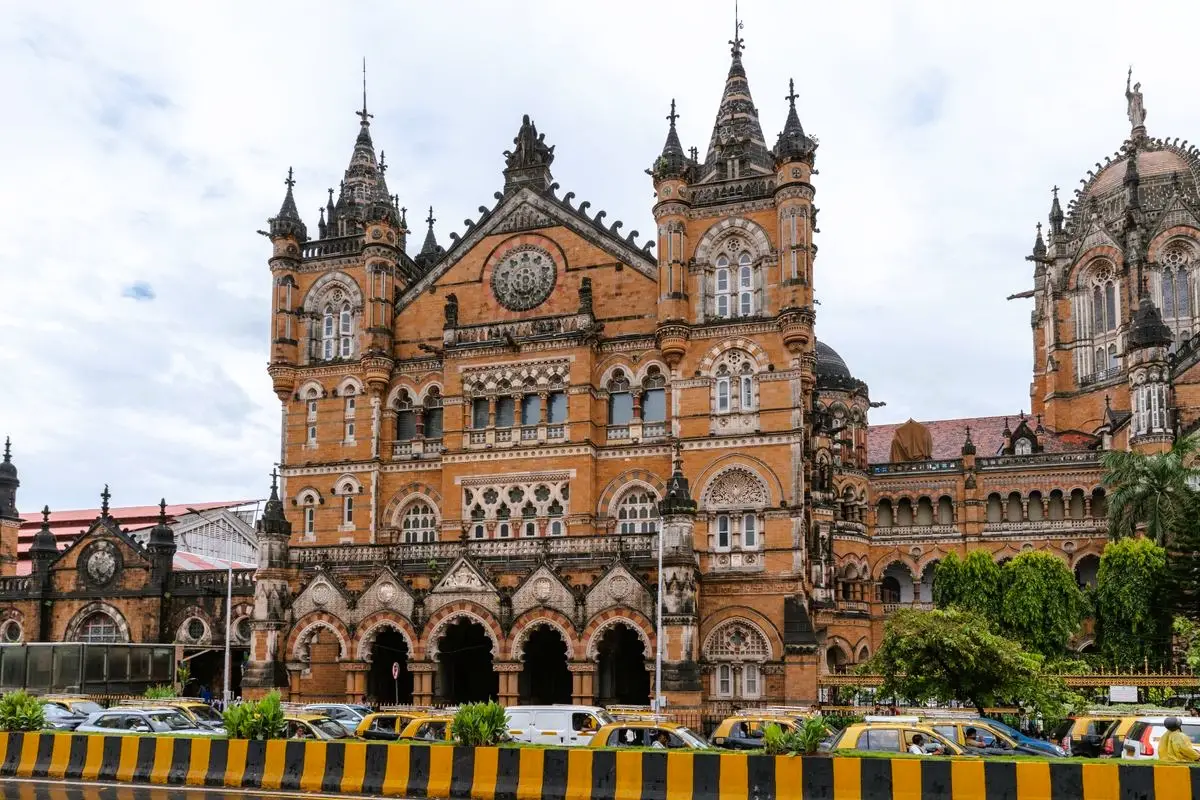
- The exterior facade and forecourt draw the heaviest visitor dwell time for photography.
- Platform 1 and the historic entrance hall carry the most architectural detail visible without special permission.
- Bottlenecks form at security screening points during 08:00–11:00 and 17:30–21:00.
- Visitors aiming to photograph the facade without crowds should approach before 09:00.
- Moving toward the northern end of the concourse generally clears congestion faster than the main southern entrance during rush periods.
- Visitors boarding a train should allow extra buffer time for the security queue, separate from the standard platform walk.
Things Worth Knowing
- The metro-adjacent entrance sees shorter queues than the main road-facing heritage entrance during peak hours.
- Heritage Gallery access operates on a limited weekday afternoon schedule and is not available as a walk-in option every day.
- Photography of the exterior at night, when the facade is lit, avoids the daytime crowd density entirely.
- The “no-rickshaw zone” around the Fort precinct means cab or metro approach is more reliable than flagging a rickshaw directly outside.
- Platform-side upper floors remain closed to general visitors regardless of season, a rule dating to post-2008 security protocols rather than any seasonal or crowd-based restriction.
Official Resources
- Official website: centralrailway.indianrailways.gov.in
- Official booking page: irctc.co.in
- Official visitor information: Enquiry counters at the main concourse and the Central Railway public information desk
Frequently Asked Questions
Can I visit inside the CSMT building or is it just a railway station?
CSMT is an active railway station with general access limited to public platforms and concourses. Entering the historic heritage rooms requires booking an official guided tour.
Do I need a ticket to view Chhatrapati Shivaji Maharaj Terminus?
Viewing the exterior architecture from the street is completely free. Entering the platforms requires a standard platform ticket, and heritage tours require a separate booking.
What is the best time of day to photograph the exterior facade?
Visit between 7:00 AM and 9:00 AM for low commuter crowds and clean light, or 6:00 PM to 8:00 PM for the evening floodlights.
Is CSMT accessible for visitors with limited mobility?
Modern concourses feature ramps and elevators for easy navigation. However, historic interior heritage rooms may contain period staircases and uneven masonry.
How long does a standard visit take?
A quick exterior walkthrough takes 30 to 45 minutes. Adding an official guided heritage tour or museum visit requires 1.5 to 2 hours total.
Disclaimer
Operational details such as hours, fees, security procedures, and access rules may change without extensive public notice. Travelers should verify time-sensitive specifics through official Central Railway and IRCTC channels before finalizing travel plans.