Great Pyramids of Giza: Entry, Tickets, and Critical Mistakes to Avoid
👀 At a Glance
| 📍 | Destination: The Great Pyramids of Giza, Al Haram, Giza Governorate, Egypt |
| 📌 | Location: Giza Plateau, 15 km southwest of central Cairo |
| 🏛️ | Recognition: UNESCO World Heritage Site – managed by Egypt’s Ministry of Tourism and Antiquities |
| ⏱️ | Visit duration: 3-4 hours for the full plateau circuit; add 45-60 min per pyramid interior |
| 🕒 | Opening hours: Summer: from 07:00 am Last Entry 04:00 pm; Winter: from 07:00 am Last Entry 04:00 pm; Ramadan: from 08:00 am Last Entry 03:30 pm |
| 📅 | Weekly closure: None; open every day of the year including Fridays and public holidays |
| 🎟️ | Reservation required: Yes for Great Pyramid interior access; Not for plateau entry |
| 💶 | Entry fee: EGP 700 (Foreign Tourist Tier, adult) |
| 🌤️ | Best visiting time: October-April, weekday mornings 7:00-9:00 AM |
| 🌐 | Official website: Ministry of Tourism and Antiquities |
📖 Overview
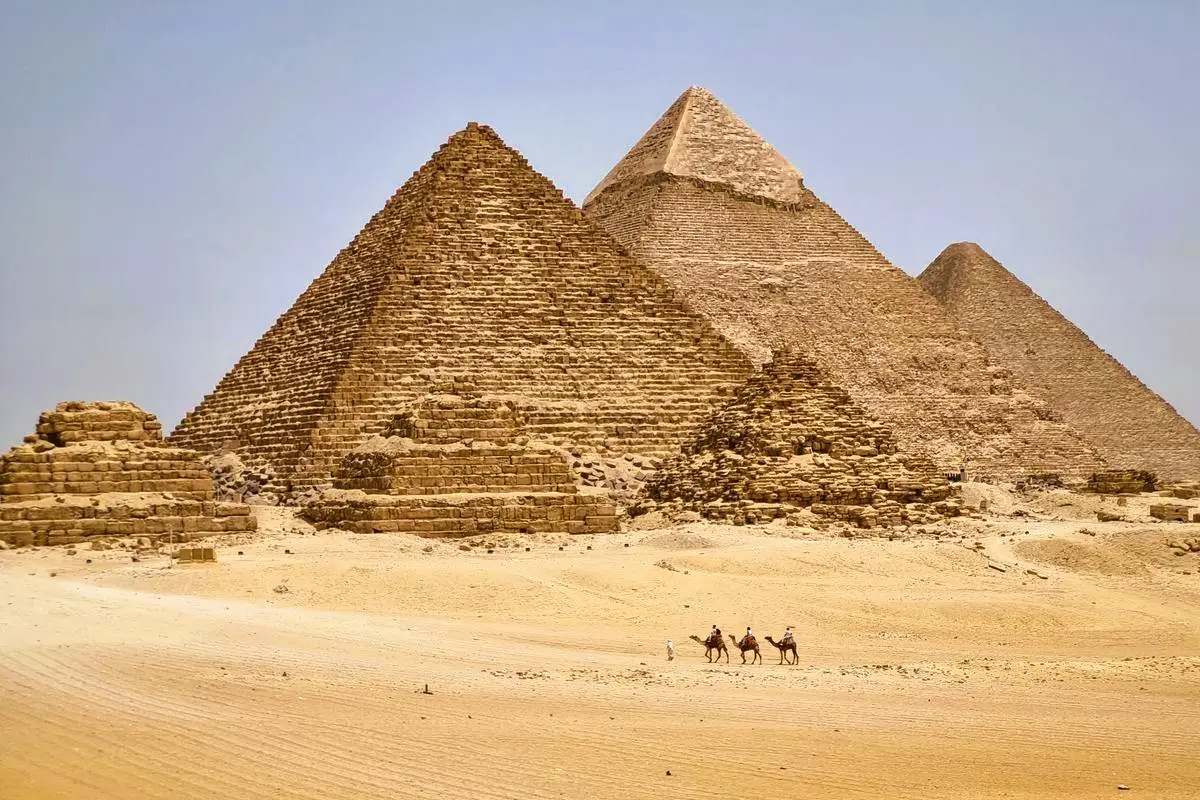
The Giza Plateau is an open-air archaeological zone covering three main pyramids, the Sphinx enclosure, several subsidiary tombs, and a working ticketing and security perimeter. It functions less like a single monument and more like a controlled site with multiple gates, tiered admission products, and separate interior access rules per structure.
This Great Pyramids of Giza visitor guide is built for travelers who need to execute a visit correctly on the first attempt: which gate to use, what each ticket tier actually covers, how the metro connects (and where it stops short), and which rules cause entry refusal or extra cost if missed. It is not a history primer.
Visitors should expect a multi-stage process: general area entry, then optional separate tickets for individual pyramid interiors, each with its own counter, capacity limit, and queue. The plateau is large, exposed to sun and sand, and requires vehicle or shuttle transport between the main pyramid cluster and outlying viewpoints. Traffic on approach roads from Cairo is frequently heavy, and crowd density shifts sharply by arrival time rather than by day of week.
🗓️ Planning The Visit
- Best season: October through April brings daytime highs of roughly 20-28°C, workable for a 3-4 hour walking circuit without heat risk.
- Best time of day: Gates open at 7:00 AM; arriving within the first 30 minutes avoids the 9:00-10:30 AM wave of coach tours.
- Average visit duration: Budget 3 hours for exteriors and the Sphinx alone; a Great Pyramid interior visit adds 45-60 minutes including a separate queue.
- Peak crowd periods: Fridays and Saturdays (the Egyptian weekend), plus Egyptian public holidays, see the heaviest domestic and international visitor overlap.
- Weather considerations: Summer (May-September) routinely exceeds 35°C by late morning with negligible shade across the plateau; carry 1.5-2 litres of water per person.
- Advance booking recommendations: Book through the official portal at least several days ahead for October-April travel.
📍 Getting There
✈️ By Air
Cairo International Airport (CAI) is the nearest airport, roughly 30 km from the plateau. No direct rail or metro link exists between CAI and Giza; a taxi, ride-hailing app, or pre-arranged hotel transfer covers the connection, typically 45-75 minutes depending on Cairo traffic.
🚇 By Train
Cairo Metro Line 2 (red line) reaches El Giza and Cairo University stations, both within the Giza district. Neither station sits at the plateau itself.
- El Giza station is roughly 8-12 km from the pyramid entrances.
- A taxi, microbus, or ride-hailing app covers the final stretch, ~15-20 minutes depending on traffic.
🛣️ By Road
Private car, taxi, or ride-hailing app from central Cairo takes approximately 30-45 minutes outside rush hour, longer during morning and evening congestion. The Giza Plateau is reached via Pyramids Road (Sharia al-Ahram) or, for the newer western approach, Fayoum Road.
Local Transport, Parking, and the Final Stretch
- The exact entrance used can depend on how you arrive and which visitor facilities are operating on the day of your visit.
- Follow the current site signage and staff instructions rather than relying on older online maps.
- The normal entry sequence is: Entrance → Ticket verification/purchase → Security screening → Turnstile/access control.
- Keep your ticket for the duration of the visit because it may be checked again at individual monument entrances.
- The general Giza Plateau ticket covers area access but does not include entry inside the pyramids.
- Interior admission requires a separate ticket for the specific pyramid.
➡️ Entry Process
- Three gates handle visitor entry, each suited to a different arrival method.
- General area tickets are sold at all operating gates via counter or self-service card machine.
- Interior pyramid add-on tickets are sold only at the Main Gate counter or in advance online — not guaranteed at the Sphinx Gate.
- Physical ID or passport is not typically required for general entry, but student-tier tickets require valid, presentable student identification.
- Security screening includes a bag check and walk-through scanner, standard at all three gates.
- Tickets must be retained for the full visit; spot checks occur at monument-specific checkpoints.
- Re-entry on the same ticket is not standard; visitors who exit the perimeter generally cannot re-enter without a new ticket.
⚠️ Warning: Interior access to any pyramid closes roughly one hour before the site’s general closing time, even if the plateau itself remains open.
🎫 Tickets & Booking
| Ticket Type | Foreign Tourist Tier | Domestic (Egyptian) Tier |
|---|---|---|
| General area entry (adult) | EGP 700 | EGP 60 |
| General area entry (student, age ≤24, valid ID) | EGP 350 | EGP 30 |
| Great Pyramid of Khufu interior (adult) | EGP 1,500 | EGP 150 |
| Great Pyramid of Khufu interior (student) | EGP 750 | EGP 75 |
| Pyramid of Menkaure interior (adult) | EGP 280 | EGP 30 |
| Pyramid of Menkaure interior (student) | EGP 140 | EGP 10 |
| Mars Ankh Tomb (adult) | EGP 200 | EGP 20 |
| Mars Ankh Tomb (student) | EGP 100 | EGP 5 |
| Labor Tombs (adult) – minimum 5 tickets | EGP 700 | EGP 700 |
| Labor Tombs (student) – minimum 5 tickets | EGP 350 | EGP 350 |
General area entry covers all three pyramid exteriors, the Sphinx enclosure, the Valley Temple area, and the Queens’ Pyramids. It does not include entry into any pyramid interior — each interior is a separate, additional ticket. Children under 6 enter free at all tiers.
Strict Cashless Policy: The Ministry of Tourism and Antiquities enforces a strict cashless policy at Giza ticket counters. Cash is no longer accepted for entry. You must pay with a physical credit/debit card (Visa/Mastercard) or NFC tap-to-pay. Cash is only useful once inside for tipping, vendors, and bathrooms.
Booking procedure:
- Online ticket booking: Available through the Ministry of Tourism and Antiquities’ official ticketing platform, egymonuments.com.
- At-gate purchase: Available via staffed counters and self-service card machines at the Main and Sphinx Gates (Card only).
- Interior tickets for the Great Pyramid are the most limited and the most likely to sell out on peak mornings — online pre-booking removes that risk entirely.
📝 Note: Individual pyramid tickets require the Giza Plateau area-entry ticket. Prices and availability can change; verify the current amount on the Ministry’s official ticketing platform before travel.
💡 Tip: If entering the Great Pyramid is important to your visit, check availability and reserve the interior ticket through the official ticketing platform before arriving. Interior tickets are separate from general plateau admission and availability can be limited on busy days.
Night Viewing
A Sound & Light Show runs most evenings at the Sphinx amphitheatre, narrating site history through illuminated projections on the monuments. It requires a separate ticket from daytime entry, runs roughly 60 minutes, and is offered in multiple languages across two or more nightly sessions. Foreign-visitor pricing runs approximately EGP 350-550 depending on seating category. This is the only formal after-dark visitor product at the site; general plateau access does not extend into evening hours.
📋 Visitor Guidelines
- Dress code:
- ✅ Shoulders and knees covered is the strongly recommended standard, though not formally enforced for foreign visitors.
- ✅ Lightweight, breathable fabric suited to desert heat and sun exposure.
- ❌ Overly revealing clothing draws unwanted attention and is discouraged as a courtesy standard.
- Photography/videography rules:
- ✅ Handheld phone and personal camera photography outdoors on the plateau, free of charge.
- ❌ Flash photography inside any pyramid interior, to protect surfaces from light damage.
- ❌ Tripods, external lighting, or commercial-grade shoots without a separate permit.
- Allowed/Prohibited items (strict list):
- ✅ Allowed: Personal handheld cameras and phones.
- ✅ Allowed: Sealed, non-perishable snacks.
- ✅ Allowed: Personal water bottles.
- ❌ Prohibited: Drones, without advance written permission from Egyptian aviation authorities (rarely granted to individual tourists).
- ❌ Prohibited: Climbing on any pyramid or monument surface.
- ❌ Prohibited: Touching or defacing ancient stone surfaces.
- ❌ Prohibited: Smoking near monument structures.
- Bag policies: Standard day bags and backpacks pass through security screening at all gates; oversized luggage is not accommodated and should stay with transport.
- Food & drink rules: Sealed snacks and personal water are permitted; perishable food is discouraged due to heat. On-site vendor food and drink carry a significant price premium.
- Expected behavior: Visitors stay on marked paths, respect roped-off zones, and use only licensed camel or horse handlers if opting for an animal ride.
- Special restrictions / guides & photographers: Licensed guides carry official Ministry-issued identification with photo and license number; verifying credentials before engaging a guide’s services is standard practice. Professional or commercial photography requires a separate permit arranged in advance.
♿ Accessibility & Visitor Facilities
| Facility | Status |
|---|---|
| Wheelchair access | ✅ Main entrance and visitor center; ramps and paved paths |
| Navigability for elderly/children | ❌ Sandy, uneven terrain between monuments; shuttle bus reduces walking load |
| Toilets | ✅ Available near main entrance and visitor center |
| Drinking water | ✅ Vendor-sold on-site; not freely provided |
| Cloakrooms/lockers | ✅ Available at the visitor center |
| Seating | ✅ Limited shaded seating near main facility points |
| First aid | ✅ Basic on-site provision; serious cases require transport back to Cairo |
| Parking | ✅ Designated paid and free areas near the Main Gate |
Pyramid interiors are not wheelchair accessible due to narrow, steep internal passages. Wheelchair users can reach the Sphinx viewing area and the Panoramic Viewpoint via the shuttle bus. Requesting a wheelchair in advance through the visitor center is recommended for guaranteed availability.
👣 During The Visit
Immediately after security screening at the Main Gate, visitors enter an open plaza with sightlines toward all three main pyramids. From here, the standard circuit moves toward the Great Pyramid of Khufu first, since its interior queue builds fastest.
- Interior-ticket holders should queue for the Great Pyramid entrance before touring the exterior circuit.
- The Panoramic Viewpoint, reached by shuttle or a longer walk, gives the widest angle on all three pyramids together and is a common photo bottleneck between 9:00 and 11:00 AM.
- The Sphinx enclosure sits toward the eastern edge of the plateau and draws its own separate crowd surge, typically slightly later in the morning than the pyramid cluster.
- Moving counter-clockwise from Khufu to Khafre to Menkaure, then toward the Sphinx, avoids backtracking across the loose-sand central zone.
- Vendors and camel/horse handlers cluster at transition points between monuments; a firm decline works if uninterested.
- Shade is minimal across the full route; the visitor center and shuttle stops are the main rest points.
This walkthrough sequence is consistent with the accessibility limitations noted above: the shuttle bus, not the walking path, is the accessible route between the Sphinx, the Panoramic Viewpoint, and the main cluster.
⚠️ Warning: Do not climb the pyramids. Scrambling up even the first few tiers of stone is strictly illegal, aggressively monitored by site police, and routinely results in detention or deportation. Stay on the designated perimeter paths.
🔖 Things Worth Knowing
- The Sphinx Gate typically opens later than the Main Gate, since it depends on plateau staff arriving first — the Main Gate is the more reliable early-entry option.
- Interior add-on tickets are not always available at the Sphinx Gate; visitors planning to enter the Great Pyramid should route through the Main Gate or book online beforehand.
- The Pyramid of Menkaure interior occasionally closes without public notice for maintenance; this does not affect the other two pyramids or general area entry.
- Camel and horse ride pricing runs on an hourly basis and differs sharply between Egyptian and foreign-visitor rates; agreeing a price before mounting avoids disputes.
- A near-universal first-time mistake is assuming the Cairo Metro reaches the plateau directly — it stops several kilometers short at El Giza station, and the connecting leg needs separate planning.
📝 Note: The Menkaure closure pattern above applies specifically to that pyramid’s interior access, not to viewing its exterior, which remains open on the same schedule as the rest of the plateau.
🔗 Official Resources
- Official Website: Ministry of Tourism and Antiquities
- Ticket Reservations: Book Tickets
- Visitor Information: Ministry of Tourism and Antiquities
ℹ️ Disclaimer
Operational details such as hours, fees, and booking procedures are subject to change without notice by the managing authority. Travelers should verify time-sensitive information through official sources before travel.