Sanchi Stupa Visitor Guide: Essential Ticket details, Entry Rules and Timing Errors to Avoid
At a Glance ⭐
- Destination: Sanchi Stupa (Buddhist Monuments at Sanchi), Sanchi, Madhya Pradesh, India
- Location: Raisen district, on a hilltop roughly 46 km northeast of Bhopal
- Recognition: UNESCO World Heritage Site (inscribed 1989)
- Visit duration: 2 to 3 hours for the main complex; up to half a day with the museum and outer stupas
- Opening hours: 6:30 am to 6:30 pm daily (sunrise to sunset), depending on the season.
- Weekly closure: Main monument complex has no weekly closure; the adjacent Sanchi Archaeological Museum closes every Friday
- Best visiting time: November to February, early morning
- Official website: asi.nic.in (Archaeological Survey of India, World Heritage listing)
Overview
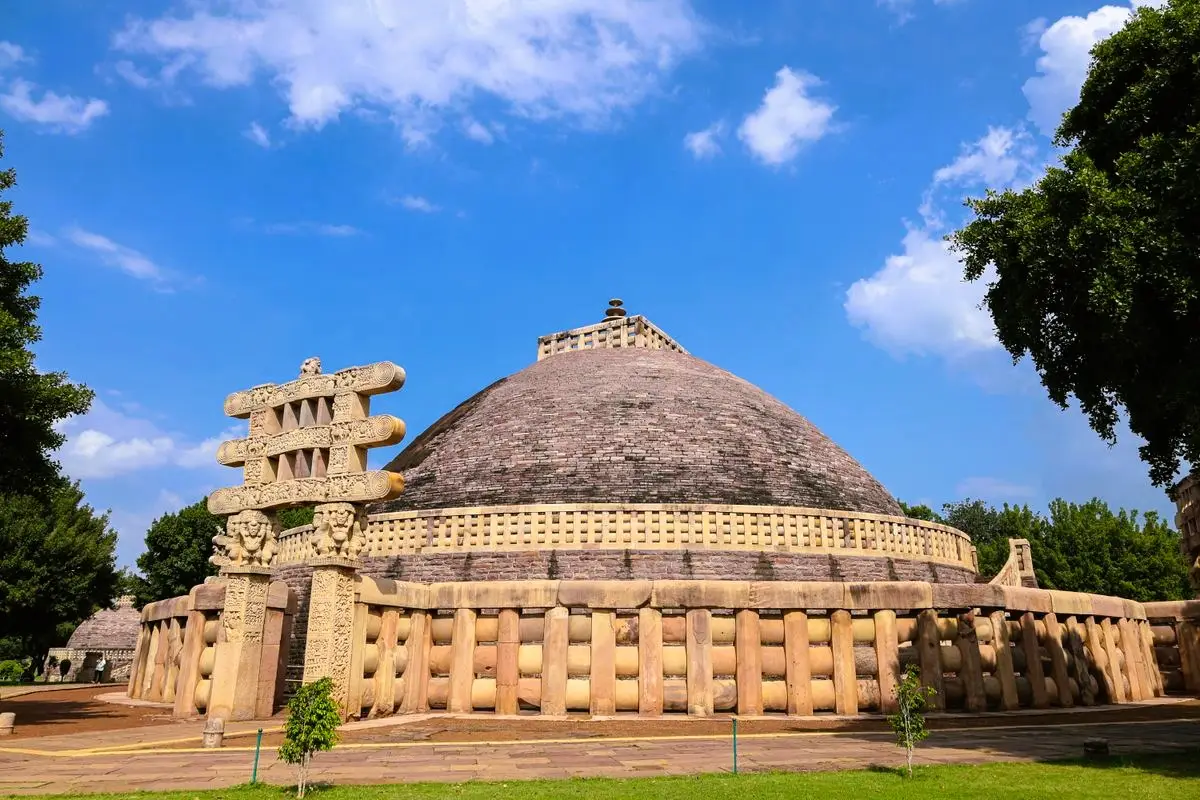
Sanchi Stupa is an open-air archaeological complex managed by the Archaeological Survey of India (ASI), spread across a hilltop with multiple stupas, ruined monasteries, temple platforms, and a separate on-site museum. This guide is built for travelers planning the actual mechanics of the visit: which gate to use, how ticketing works on the ground, how to get from Bhopal or Vidisha without wasted transfers, and what causes avoidable delays at the site. It is not a historical primer.
Visitors should expect a walking-heavy, uneven-terrain site with limited food and shade, a single ticketed entry point, and a layout that rewards a planned sequence over random wandering. The site sees a mix of domestic day-trippers from Bhopal, school groups, and international travelers combining it with Bhimbetka or Khajuraho, so timing the visit around crowd patterns matters more than most guides suggest.
Planning The Visit
- Best season: November through February offers the most walkable conditions; stone paths retain heat and glare badly from April to June.
- Best time of day: Arrival within the first hour after sunrise avoids both bus-group crowds and the harsher midday sun on the unshaded hilltop.
- Average visit duration: Budget 2 hours for the Great Stupa and main terrace alone; add 45–60 minutes for Stupa 2 and 3, and 30–45 minutes for the museum.
- Peak crowd periods: Weekends, winter school-holiday weeks (late December to early January), and mid-morning hours (10:00–13:00) when bus tours from Bhopal typically arrive.
- Weather considerations: Surface temperatures on stone paths climb sharply above 30°C from March onward; monsoon months (July–September) bring slippery steps and reduced visibility on the hill.
- Advance booking recommendations: Online booking through the official ASI e-ticketing portal is recommended for predictable entry, though at-gate cash and digital payment remain available and are rarely oversubscribed outside peak weekends.
Getting There
By Air
The nearest airport is Raja Bhoj Airport in Bhopal, roughly 46–50 km from Sanchi. It handles domestic connections to major Indian cities. From the airport, travelers need a taxi or pre-arranged transfer into Bhopal city or directly to Sanchi, since no direct public shuttle runs from the terminal to the site.
By Train
- Sanchi has its own small railway station (Sanchi Railway Station, code SCI), about 1 km from the monument gate, but only a limited number of trains stop there.
- Vidisha Railway Station (code BHS), roughly 10 km away, sits on the main Delhi–Bhopal line and has far more frequent stoppages.
- Bhopal Junction (BPL) and Habibganj/Rani Kamlapati (HBJ), both around 46–55 km from Sanchi, offer the widest rail connectivity and are the standard entry points for long-distance travelers.
- From Vidisha or Bhopal stations, onward travel to Sanchi requires a taxi, auto-rickshaw, or bus — there is no direct rail transfer service.
By Road
- Sanchi sits on NH-146, connecting it directly to Bhopal (~46 km, roughly 1–1.5 hours by car) and onward toward Vidisha and Sagar.
- State-run and private buses operate regularly between Bhopal’s main bus stand and Sanchi.
- Self-drive or hired car from Bhopal is straightforward on a well-maintained highway; traffic congestion inside Bhopal city itself is the main variable affecting total travel time.
Local Transport, Parking, and the Final Stretch
- From Vidisha Junction, auto-rickshaws to Sanchi run frequently and take roughly ~20–30 minutes for the ~10 km stretch.
- From Sanchi Railway Station, the monument gate is a ~15–20 minute walk, or a short auto-rickshaw or cycle-rickshaw ride of a few minutes.
- A designated parking area sits near the base of the hill, a short walk from the ticket counter and main gate.
- The final approach to the complex involves a climb up a paved hill path from the parking and ticket area to the entrance gate — not steep, but continuous.
Entry Process
- A single main gate serves as the public entry point at the base of the hill, adjacent to the ticket counter and parking area.
- Tickets — whether purchased online or at the gate — are checked at this entry point before the climb to the monument terrace.
- Visitors carrying online e-tickets should keep a printed copy or a clearly loaded mobile screen ready, since signal reception on the hill can be inconsistent.
- Government-issued photo ID is not typically required for entry, but foreign nationals should carry a passport in case of a fee-tier verification check.
- Queues are generally short outside peak weekend mornings; bag checks are basic and quick, focused on prohibited items rather than detailed screening.
- Re-entry on the same day is generally not permitted once a visitor exits through the main gate, so a full loop of the complex should be planned before departing.
💡Tip: Complete the museum visit before or after the hilltop walk, not as an afterthought — it sits at a separate location near the base and requires a short walk back down.
Tickets & Booking
Booking Tickets Online or at the Gate
Entry operates on a tiered fee system based on visitor category, verified at the ticket counter or during online booking.
| Visitor Category | Tier | Entry Fee |
|---|---|---|
| Indian nationals & SAARC/BIMSTEC citizens | Domestic Tier | Lower fixed rate (cash or online) |
| Foreign nationals (all other countries) | Foreign Tourist Tier | Higher fixed rate (cash or online) |
| Children aged 15 years or below | Child Concession Tier | Free entry |
- Online booking runs through the official ASI e-ticketing gateway, listed on the ASI monument page as the designated portal for advance purchase.
- At-gate booking accepts cash and standard digital payment methods including card and UPI-based transfers.
- Online rates are typically set marginally lower than at-gate cash rates to encourage advance digital booking.
- The museum charges a separate entry fee from the main monument complex and is not bundled into the standard hilltop ticket.
Night Viewing
Sanchi does not offer after-dark entry to the monument complex itself, since daily access ends at sunset. A separate evening Sound and Light Show operates near the site, narrating the site’s Buddhist significance through projection and audio staging, with its own distinct ticket and entry window beginning roughly an hour before showtime. This is a standalone evening program run independently of daytime monument access, not an extension of it.
Visitor Guidelines
- Dress code: No enforced religious dress code; modest, practical clothing is advised out of respect for the site’s spiritual significance.
- ✅ Covered, closed-toe footwear recommended for uneven stone paths
- ❌ High heels or slippery-soled footwear discouraged due to loose stone surfaces
- Photography/videography rules: General photography permitted throughout the open complex for personal use; commercial or professional filming setups may require separate permission.
- ✅ Handheld cameras and phones permitted freely
- ❌ Tripods and drone equipment typically restricted without prior authorization
- Allowed/Prohibited items (strict list):
- ✅ Allowed: Water bottles to stay hydrated
- ✅ Allowed: Small purses and ladies’ handbags
- ❌ Prohibited: Drones or unmanned aerial equipment without clearance
- ❌ Prohibited: Large professional film/broadcast equipment without permit
- ❌ Prohibited: Any activity causing physical contact with carved surfaces
- ❌ Prohibited: Tobacco and smoking products
- ❌ Prohibited: Inflammable, dangerous, or explosive articles
- Bag policies: Standard daypacks and camera bags are permitted through the basic bag check at the entry gate.
- Food & drink rules: Food consumption is discouraged near the monument structures; water is generally permitted given the exposed, shade-limited terrain.
- Expected behavior: Visitors are expected to maintain a respectful, quiet demeanor near stupa structures and avoid climbing on ancient stonework.
- Special restrictions / guides & photographers: Independent licensed guides are available at the site gate for hire; professional photographers should confirm any equipment restrictions with on-site ASI staff before setup.
Accessibility & Visitor Facilities
| Facility | Status |
|---|---|
| Wheelchair access | ❌ Not available — raw stone and uneven paths across the hilltop are not wheelchair-navigable |
| Navigability for elderly visitors and children | ❌ Limited — continuous uneven terrain and a hill climb from the gate |
| Toilets | ✅ Basic restroom facilities near the entrance |
| Drinking water availability | ✅ Filtered water points installed at several locations across the complex |
| Cloakrooms/lockers | ❌ Not confirmed as a standard facility |
| Seating | ✅ Limited bench seating in shaded pockets near the lawns |
| First aid | ❌ Not confirmed as a dedicated on-site facility |
| Parking | ✅ Designated parking area near the base of the hill |
During The Visit
- After the security and ticket check at the main gate, the path leads up a paved incline toward the upper terrace where the Great Stupa (Stupa 1) sits.
- The circumambulatory path around the Great Stupa is the natural first stop and the busiest point during mid-morning hours.
- The four carved gateways (toranas) around Stupa 1 draw the longest visitor dwell time and create the main bottleneck during group-tour arrivals.
- Stupa 3 and the monastery ruins sit a short walk from the main terrace and see noticeably lighter foot traffic.
- Stupa 2, located away from the main cluster, requires a separate 10–15 minute walk through quieter, tree-lined ground and is often skipped by time-pressed visitors — worth including for a slower pace.
- Given the wheelchair-inaccessible terrain confirmed above, visitors with mobility constraints should prioritize the main terrace and Great Stupa area, since reaching Stupa 2 and the upper monastery ruins involves the longest and roughest stretches.
- The museum, located near the base rather than the hilltop, is best sequenced either immediately before the climb or immediately after descending, to avoid a second uphill return trip.
Things Worth Knowing
- The Sanchi Railway Station stop is served by very few trains — checking the specific train’s stoppage list before relying on it saves a wasted wait.
- The museum’s Friday closure catches many visitors off guard since it runs on a different schedule from the main complex, which stays open daily.
- Early risers arriving right at sunrise generally beat both the tour-bus wave and the harshest sun, gaining nearly two hours of comfortable walking before conditions shift.
- The evening Sound and Light Show is ticketed and scheduled entirely separately from daytime entry — visitors assuming it’s included in the day ticket are often caught out at the gate.
- Stupa 2’s quieter, less-visited status makes it a reliable fallback for visitors seeking fewer crowds without leaving the complex.
💎Expert Insight: Bridging the ancient Buddhist sites of central India with the iconic Mughal architecture of Agra completes a classic heritage route. The Taj Mahal Visiting Guide helps you coordinate this transition by detailing strict entry protocols, optimal early-morning viewing windows, and direct rail connections back from the Madhya Pradesh corridor.
Official Resources
- Official website: asi.nic.in — World Heritage listing for Buddhist Monuments at Sanchi
- Official booking page: ASI e-ticketing portal, linked from the monument’s official ASI “Must See” listing page
- Official visitor information: ASI Superintending Archaeologist, Bhopal Circle office, listed as the contact point for the Sanchi monument
Disclaimer
Operational details such as hours, fees, closure days, and booking procedures are subject to change without notice. Travelers should verify time-sensitive information through official Archaeological Survey of India sources before finalizing travel plans.