A Comprehensive Golden Temple Amritsar Guide: Opening Hours, Dress Code and Entry Rules
At a Glance ⭐
- Destination: Harmandir Sahib – The Golden Temple
- Location: Amritsar, Punjab, India
- Recognition: Global Spiritual Landmark (The holiest shrine in Sikhism, administered by the SGPC)
- Visit duration: 2–4 hours for a full circuit including langar
- Opening hours: Open continuously, 24 hours a day, every day
- Weekly closure: None; the complex does not close on any day of the week
- Entry fee: No admission charge for any visitor category
- Best visiting time: Early morning (before 6 AM) or late night (after 10 PM)
- Official website: Official Governing Body (SGPC)
Overview
Harmandir Sahib (the Golden Temple) is a sacred, active place of worship rather than a ticketed museum. Open 24/7 year-round, visitor flow naturally follows prayer schedules and crowd volumes rather than set operating hours.
This Golden Temple Amritsar Guide focuses purely on practical logistics for a seamless visit—such as navigating entrances, airport transfers, security protocols, and experiencing the langar (community kitchen). Expect a multi-stage entry process: shoe deposit, foot-washing, a security scan, and a walk through the marble concourse before reaching the causeway to the sanctum itself. Crowds are heaviest at dawn ceremonies and on weekends; foot traffic on the causeway can back up regardless of the hour chosen.
Planning The Visit
- Best season: October through March keeps daytime temperatures manageable for the barefoot marble walkways, which retain and radiate heat sharply from April onward.
- Best time of day: The window before the 4:15 AM Palki ceremony and after 10:30 PM offers the shortest wait for the causeway leading to the sanctum, since day-tour groups have not yet arrived or have already left.
- Average visit duration: Two hours covers a standard circuit; four hours allows time in the langar hall and a slower walk around the Parikrama (marble perimeter path).
- Peak crowd periods: Weekend mornings, national holidays, and the months around Baisakhi (mid-April) and Guru Nanak Jayanti (November) draw the heaviest volume; causeway waits can extend well beyond the off-peak average.
- Weather considerations: Punjab summers regularly exceed 40°C, and the marble floor becomes uncomfortable for bare feet by mid-morning; winter fog (December–January) can add unpredictable delay to flights and trains serving Amritsar.
- Advance booking recommendations: No ticket or reservation exists for general entry; travelers should instead plan around flight and train fog delays in winter and book Amritsar accommodation early during the April and November festival windows, when the city’s hotel supply tightens.
Getting There
By Air
Sri Guru Ram Dass Jee International Airport (ATQ) is the nearest airport, roughly 11–13 km from the complex. It receives domestic connections from Delhi, Mumbai, and other major Indian cities, along with a smaller set of direct international routes. From the terminal, a free SGPC-operated shuttle bus and metered taxis both run into the city; the shuttle serves the temple area specifically, while taxis can be directed straight to the nearest gate.
By Train
Amritsar Junction is the primary rail station, about 2 km from the complex and well connected to Delhi, Mumbai, Kolkata, and Chandigarh on long-distance and express routes. A free shuttle bus, funded and run by the temple management, departs from outside the station roughly every 15–20 minutes and drops passengers close to the main approach street.
By Road
Amritsar sits on National Highway 44, the primary north-south corridor linking Delhi and the India-Pakistan border crossing at Attari. Travelers driving from Delhi should budget close to a full day given the distance and highway traffic through Punjab’s district towns. Inter-state buses terminate at the Amritsar Inter-State Bus Terminal (ISBT), roughly 1.4 km from the complex.
Local Transport, Parking, and the Final Stretch
- Auto-rickshaws and cycle-rickshaws operate throughout the city and can be flagged from any major junction.
- App-based ride services function normally in Amritsar and offer fixed-fare estimates before booking.
- A multi-level car park sits at the start of Heritage Street, near the Maharaja Ranjit Singh statue, serving private vehicles and taxis.
- From that car park, the walk to the nearest gate covers roughly 400–600 meters along the pedestrianized Heritage Street.
- E-rickshaws run this same stretch for a small per-person fare; drivers inside the parking structure often quote inflated rates, so travelers should negotiate outside the gate instead.
- The free shuttle buses from both the railway station and ISBT run around the clock, not on a fixed daytime-only schedule.
Entry Process
The complex has four entrances, reflecting the founding principle of openness from every direction. The busiest and most commonly used is Ghanta Ghar Deori (Clock Tower Gate), reached directly via Heritage Street. Visitors without a specific reason to use another gate should default to this one, since it connects most directly to parking, the railway shuttle drop-off, and the shoe-deposit counters.
Entry follows a fixed sequence at every gate:
- Shoes and socks come off before the threshold; free shoe-deposit counters issue a numbered token.
- Feet must be rinsed at the shallow water channel built into the entrance path.
- A head covering goes on before crossing the threshold; the temple provides free loaner scarves at each gate for visitors without one.
- A security scan and bag check follows, covering both metal detection and a visual inspection of bag contents.
- No ticket, ID, or reservation confirmation is checked at any point in this sequence.
⚠️ Warning: Sewadars (volunteer attendants) at the gate can refuse entry on the spot for dress-code violations, including shorts, sleeveless tops, or an uncovered head. There is no appeal process at the gate itself; the practical fix is to borrow a scarf and adjust attire before re-attempting entry.
Re-entry is unrestricted. Visitors can leave to eat outside, retrieve something from a hotel, or step out for photographs on Heritage Street and return through any gate without needing a new token, aside from re-depositing shoes if they were retrieved.
Tickets & Booking
Booking Tickets Online or at the Gate
There is no ticketing system, fee tier, or booking portal for general entry to Harmandir Sahib. Every visitor category enters free of charge, and this applies uniformly regardless of nationality, religion, or group size.
| Visitor Category | Entry Requirement | Cost |
|---|---|---|
| Domestic visitors | Dress code and shoe/head compliance only | No charge |
| Foreign tourists | Dress code and shoe/head compliance only | No charge |
| Group and school tours | Same entry sequence; larger groups should coordinate gate choice with a sewadar for crowd flow | No charge |
No advance registration exists for individuals. Large tour operators and school groups can coordinate visit timing directly with SGPC administration to avoid entering during a peak kirtan session, but this is a courtesy arrangement, not a paid booking. Since no payment changes hands at the gate, there is no accepted payment method to plan for at entry; the only spending inside the complex is optional, for donation boxes or the on-site Sikh museum.
Night Viewing
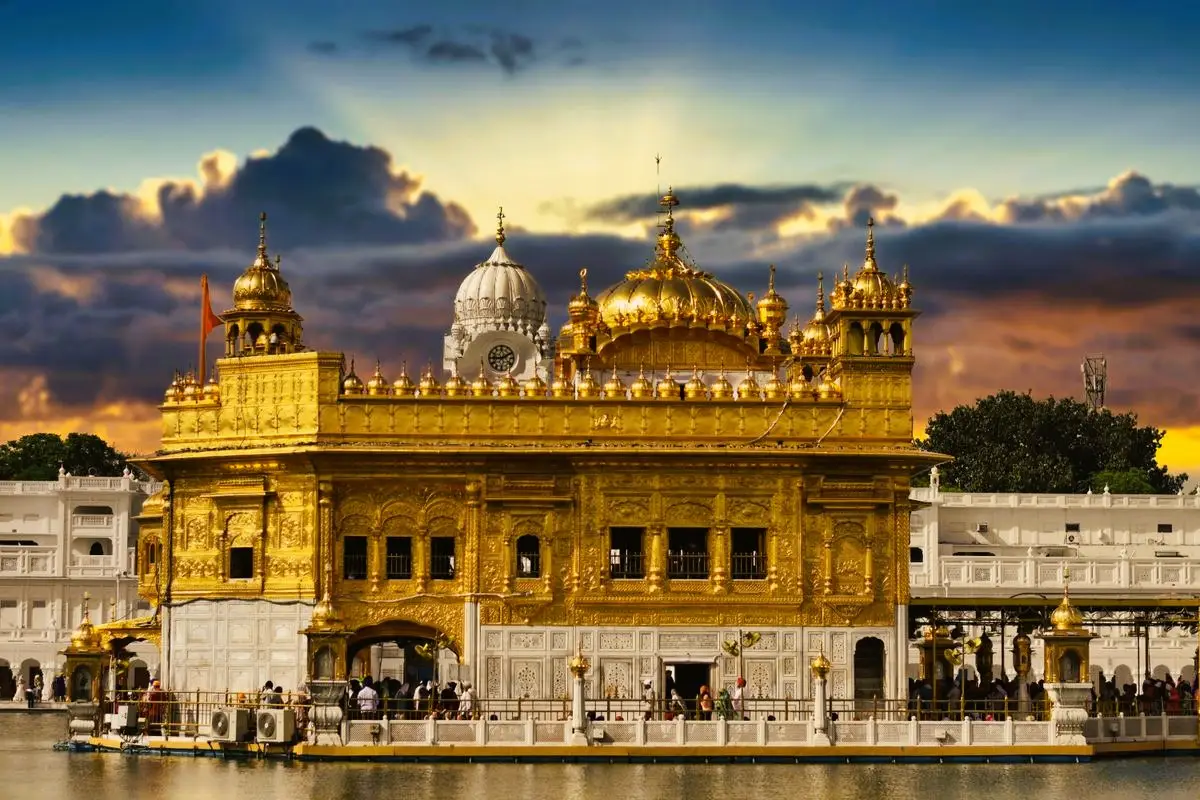
The complex operates identically at night as during the day; there is no separate “night viewing” ticket or reduced-access period. The illuminated dome and causeway are visible and accessible at any hour, and the late-night window (after 10:30 PM, once the Sukhasan ceremony carries the Guru Granth Sahib to rest) is one of the least crowded times to approach the sanctum directly.
Visitor Guidelines
- Dress code:
- ✅ Full-length trousers or a long skirt/dress covering the knee
- ✅ Head should be strictly covered with scarf, handkerchief, or bandana.
- ✅ Sleeved tops covering the shoulder
- ❌ Shorts or skirts above the knee
- ❌ Sleeveless tops or tank tops
- ❌ Tight-fitting or sheer clothing that outlines the body closely
- Photography/videography rules: Permitted only in the outer Parikrama and courtyard areas; strictly prohibited inside the sanctum sanctorum (the inner golden structure itself). Attendants may still restrict photography in outer areas at their discretion during ceremonies.
- Allowed/Prohibited items (strict list):
- ✅ Allowed: Mobile phones and personal cameras, kept on silent mode
- ✅ Allowed: Small personal bags after security screening
- ✅ Allowed: Leather wallets and belts
- ❌ Prohibited: Tobacco, bidis, or cigarettes in any form, including inside sealed bags or pockets
- ❌ Prohibited: Alcohol or any other intoxicant
- ❌ Prohibited: Chewing gum
- ❌ Prohibited: Sunglasses worn inside the main complex
- ❌ Prohibited: Tripods or professional video rigs without prior management permission
- Bag policies: Large backpacks and suitcases are not permitted past the gate; a free cloakroom near the entrance holds bags against a numbered token.
- Food & drink rules: No eating anywhere inside the Parikrama or courtyard; all food consumption is confined to the langar hall or outside the complex.
- Expected behavior: Silence or soft speech is expected throughout; running, pushing, or loud conversation draws attendant intervention. Visitors sitting on the Parikrama should keep legs folded rather than extended toward the sanctum or pool.
- Special restrictions / guides & photographers: Independent tour guides can accompany groups but cannot film or photograph inside the sanctum on the group’s behalf; any commercial filming requires separate written permission from SGPC management arranged in advance.
Accessibility & Visitor Facilities
| Facility | Status |
|---|---|
| Wheelchair access | ✅ Ramps and stair lifts installed at several points; surface transitions at some thresholds remain uneven |
| Navigability for elderly visitors and children | ✅ Manageable with a wheelchair rental at the Parikarma office near Ber Baba Budha Sahib, though queues and the causeway crowd add strain |
| Toilets | ✅ Public facilities near the main entrance and parking structure |
| Drinking water availability | ✅ Free water and sweetened “Chabeel” drink stations at four corners of the main complex |
| Cloakrooms/lockers | ✅ Free shoe deposit and bag cloakroom at every gate |
| Seating | ✅ Designated chair seating available for elderly or disabled visitors who cannot sit on the floor |
| First aid | ✅ On-site medical assistance point within the complex |
| Parking | ✅ Multi-level structure at Heritage Street with ramp access and washrooms |
💡 Tip: Wheelchair users bringing their own chair should request the accessible route directly from a sewadar at the gate rather than the standard causeway queue, since the main causeway includes steps that a personal wheelchair cannot clear without assistance.
During The Visit
After clearing security, the standard flow moves visitors onto the marble Parikrama circling the Amrit Sarovar (the sacred pool), with the causeway to the sanctum branching off partway around. The causeway queue is the primary bottleneck, since it narrows to a single-file bridge and volume is capped by the width of the sanctum entrance itself.
- Visitors aiming for the sanctum should join the causeway queue directly rather than completing the full Parikrama first, since the queue reforms continuously and does not pause for latecomers.
- The Akal Takht, facing the causeway entrance, and the Central Sikh Museum near the Clock Tower Gate are the two areas worth allocating extra time to beyond the sanctum itself.
- The langar hall operates as a separate, high-throughput system: visitors collect a plate and utensils, sit in long communal rows (pangat), and are served by volunteers moving continuously with serving buckets.
- Langar seating turns over fast; visitors are expected to eat and vacate the row promptly once volunteers signal the next group can be seated.
- Bathing in the Sarovar is permitted at designated steps, but soap, shampoo, and swimming strokes are not; a separate wet-clothes changing room sits near the bathing steps for use afterward.
- Wheelchair users should route through the accessible path flagged by a sewadar rather than the standard causeway steps, consistent with the facility notes above.
Things Worth Knowing
- The Ghanta Ghar (Clock Tower) Gate carries the heaviest foot traffic because it connects directly to parking and the main bazaar street; the other three gates typically move faster for visitors arriving on foot from elsewhere in the old city.
- The free shuttle buses from the railway station and bus terminal run around the clock, which is not obvious from a first search and eliminates the need for a paid taxi entirely for budget-conscious arrivals.
- Photography rules are enforced unevenly by individual attendants in the outer Parikrama even though management policy nominally allows it there; travelers should keep the phone lowered near the causeway entrance regardless of what was photographed moments earlier elsewhere in the courtyard.
- The electronic stair-lift chair installed for elderly and disabled visitors moves at a deliberately slow pace; it is not a fast-track option and should not be chosen by anyone trying to save time.
- Winter fog between December and January is the single most common cause of delayed flights and trains into Amritsar; travelers on tight connections should build in a buffer day rather than scheduling a same-day onward departure.
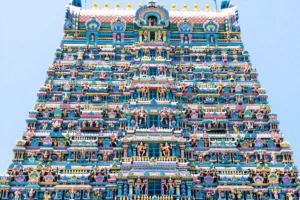
Expert Insight: The Golden Temple manages over 100,000 daily visitors with highly centralized, clockwork efficiency, funneling massive crowds into quiet reflection yet staying streamlined and calm. However, similar mastery over crowd management can also be witnessed in Meenakshi Amman Temple in Madurai, which thrives on a dense, beautifully chaotic energy.
Official Resources
- Official website: SGPC official portal
- Official booking page: Free Entry; Official Accommodation Booking: SGPC Sarai Booking Portal
- Official visitor information: SGPC official portal and the Amritsar district administration’s tourism page at amritsar.nic.in
Frequently Asked Questions
Can I store heavy luggage or suitcases at the Golden Temple?
Yes, free 24/7 cloakrooms (Gathri Ghar) outside the main entrances safely hold large suitcases and backpacks against a numbered token.
Can tourists stay overnight inside the Golden Temple complex?
Yes, the SGPC operates several low-cost pilgrim inns (u003cemu003eSaraisu003c/emu003e), including dedicated rooms for international tourists, on a first-come, first-served basis.
Are wheelchairs available on-site for elderly or disabled visitors?
Yes, free manual wheelchairs can be borrowed at the u003cemu003eParikramau003c/emu003e office near Ber Baba Budha Sahib, along with accessible ramps to navigate the complex.
What are the Amritsar Golden Temple langar timings?
Golden Temple langar is served 24/7, throughout the year without any set opening or closing times and serves free vegetarian food continuously. Everyone is welcome to visit and eat at absolutely any hour of the day or night.
How much time does it take to visit the Golden Temple?
A visit to the Golden Temple on a weekday takes 2 to 3 hours and during weekends or festivals it can take 4 to 6 hours due to longer queues. This includes walking the Parikrama, visiting the inner sanctum, and eating at the Langar.
Disclaimer
Operational details such as shuttle frequency, security procedures, and facility availability can change without advance public notice, particularly around festival periods or security alerts. Travelers should verify time-sensitive specifics through the official SGPC channels or local Amritsar authorities before finalizing arrival plans.