Khajuraho Group of Monuments: Essential Entry, Ticketing, and Effortless Transit Guide
At a Glance ⭐
- Destination: Khajuraho Group of Monuments, Western Group of Temples complex
- Location: Khajuraho town, Chhatarpur district, Madhya Pradesh, India
- Recognition: UNESCO World Heritage Site (inscribed 1986)
- Visit duration: 2–3 hours for the Western Group; half-day for all three groups combined
- Opening hours: Sunrise to sunset, gate closes roughly one hour before dusk
- Weekly closure: No weekly closure; open all seven days
- Entry fee: Tiered — Domestic, SAARC/BIMSTEC, and Foreign Tourist rates apply
- Best visiting time: October through March, early morning
- Official website: asi.nic.in (Archaeological Survey of India monument portal)
Overview
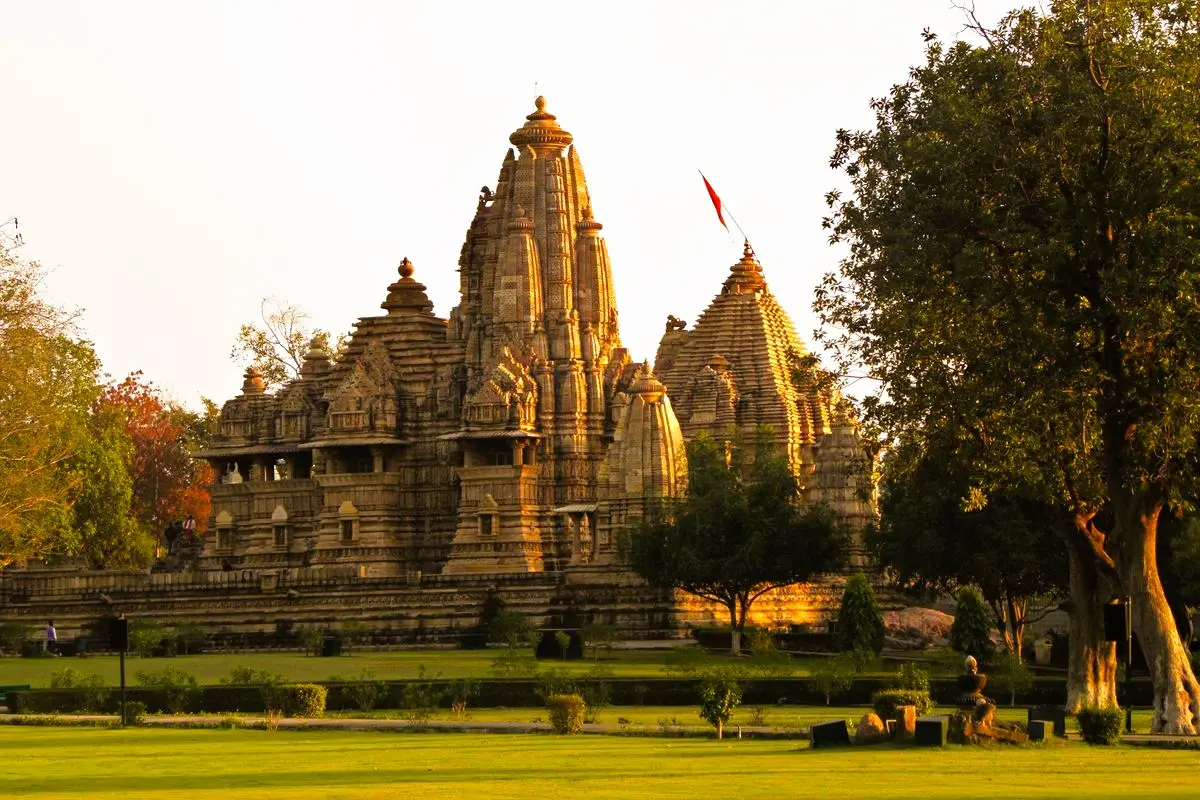
The Khajuraho Group of Monuments refers to the cluster of Chandela-era temples split across Western, Eastern, and Southern zones near Khajuraho town. Only the Western Group sits inside a ticketed, walled ASI enclosure. The Eastern and Southern groups stand in open public space with no gate, no fee, and no fixed hours.
This Khajuraho Group of Monuments visitor guide serves travelers who need the mechanics of the visit: which gate to use, how the payment system actually works on-site, and which transit options run and which don’t. It skips temple history and sculptural detail available elsewhere.
Expect a multi-stage process: security screening, digital-only payment at the ticket point, and a walled complex requiring 1.5–2 hours of walking on uneven sandstone paths. The site draws steady but rarely overwhelming crowds outside peak festival weeks. Remote-feeling logistics apply — flight service is seasonal, and most travelers arrive by long-distance train or road.
Planning The Visit
- Best season: October to March.
- Daytime highs stay in the comfortable range for multi-hour outdoor walking.
- Summer months (April–June) push midday temperatures to extreme highs, making stone surfaces uncomfortably hot underfoot.
- Best time of day: Within the first hour after opening.
- Facade lighting is even and shadow-free at this hour, aiding photography without haze.
- Midday sun creates harsh glare directly on the sandstone carvings.
- Average visit duration: Budget 2–3 hours for the Western Group alone.
- Add 45–60 minutes if combining with the adjoining Archaeological Museum, which accepts same-day Western Group tickets.
- Peak crowd periods: Last week of February during the annual Khajuraho Dance Festival.
- This week draws performers, media, and delegations directly into the temple complex grounds.
- Weather considerations: Monsoon months (July–August) bring heavy rain that makes sandstone steps slippery.
- Interior mandapa areas stay dim year-round; monsoon cloud cover worsens visibility further.
- Advance booking recommendations: Book the entry e-ticket online before arrival whenever possible.
- On-site payment depends entirely on a mobile UPI scan; travelers without a working Indian payment app face real friction at the gate.
Getting There
By Air
Khajuraho Airport (HJR) sits a short drive from the Khajuraho Group of Monuments(temples) complex, but service is seasonal and thin.
- Flight operations often pause entirely during low season and resume around October.
- When active, IndiGo and Air India run limited-frequency routes to Delhi and Varanasi.
- A new scheduled Delhi–Khajuraho–Varanasi service is set to begin in the 2026 winter schedule, but travelers should verify active routes close to their travel date rather than assume year-round service.
- Fallback airports with more reliable year-round connections: Gwalior (~300 km) and Jabalpur (~250 km), both requiring a long road transfer onward.
By Train
Khajuraho Junction (KURJ) is the direct rail gateway, connected to Delhi via the Hazrat Nizamuddin–Khajuraho Vande Bharat Express.
- Runs six days a week, skipping one weekday — confirm the current no-service day before booking, since railway schedules shift.
- Journey time from Delhi’s Hazrat Nizamuddin station runs ~8 hours 20 minutes.
- A slower overnight express (Gita Jayanti Express) also connects Delhi to Khajuraho on a different multi-day schedule, useful as a backup or overnight option.
- Original photo ID is required for verification when boarding and may be checked again at the station exit.
By Road
Khajuraho connects by highway to nearby rail and road hubs used as alternate gateways.
- Jhansi (~175 km) and Mahoba are common rail-transfer points for travelers without a direct Khajuraho train slot.
- State and private long-distance buses connect Khajuraho to regional cities including Satna and Chhatarpur.
- Road surfaces vary in quality on rural stretches; night driving on unlit sections is not advisable for self-drive visitors.
Local Transport, Parking, and the Final Stretch
- Auto-rickshaws and e-rickshaws operate throughout Khajuraho town and are the standard way to reach the Western Group gate from hotels.
- The Khajuraho Group of Monuments complex sits within walking distance of the town center for travelers staying in central Khajuraho.
- Paid and informal parking areas sit adjacent to the Western Group entrance for private vehicles and taxis.
- The nearest transit hub for onward travel is Khajuraho Junction railway station, a short local ride from the complex.
Entry Process
- A single main gate serves the Western Group enclosure; the historic ticket-office entry point on Main Road has been superseded by a relocated gate closer to the fenced zone.
- Ticket verification happens at this gate via QR-coded e-ticket or a paper printout, checked against ID.
- Visitors must carry original photo identification; a screenshot or copy of ID alone is not sufficient.
- Security screening includes a bag check at the gate before entry.
- Expect informal ticket “helpers” stationed near the entrance offering to complete the QR payment for a small service charge — this is not an official ASI service.
- Re-entry on the same ticket is not permitted once a visitor exits the enclosure; the e-ticket is valid for single-day entry only, not multiple re-entries.
Warning: Foreign-issued credit and debit cards frequently fail at the gate’s payment terminal. The system runs on Indian UPI apps only; travelers without one should complete booking through the official portal in advance.
Tickets & Booking
On-site cash and card payment has been phased out at the Western Group gate. Entry payment now runs through a QR-code scan-and-pay system linked to Indian UPI apps.
| Tier | Applies To | Notes |
|---|---|---|
| Domestic Tier | Indian nationals | Lowest fee bracket |
| SAARC/BIMSTEC Tier | Citizens of SAARC and BIMSTEC member countries | Matches the Domestic Tier rate |
| Foreign Tourist Tier | All other foreign nationals | Highest fee bracket |
| Child/Student Concession Tier | Children below 15 years | Free entry |
- The Archaeological Museum adjoining the Western Group accepts the same-day Western Group ticket for entry at no extra charge.
- Booking channels: the official ASI ticketing portal for advance purchase, or the gate QR scanner for on-arrival payment.
- E-tickets are non-transferable and non-refundable once issued; cancellations are not accepted.
- Travelers without a functioning UPI app should book online in advance rather than rely on gate-side workarounds.
Night Viewing
The Khajuraho Group of Monuments enclosure itself does not offer after-hours temple access; the gate closes roughly an hour before dusk and there is no night-entry ticket for walking among the monuments after dark.
- A separate Sound and Light Show runs each evening on the temple grounds outside the walking-tour hours, narrated in Hindi and English.
- Show timing shifts seasonally with sunset: later start in the March–September window, earlier start October–February.
- Sound and Light Show tickets are sold separately and cannot be booked in advance through the standard temple e-ticket channel.
Visitor Guidelines
- Dress code: No enforced formal dress code, but modest clothing is expected given the site’s active religious status.
- ✅ Covered shoulders and knees are appropriate and recommended.
- ❌ Overtly revealing clothing is discouraged inside the complex.
- Photography/videography rules: Personal photography is generally permitted in open courtyard areas.
- ✅ Handheld personal cameras and phones are allowed.
- ❌ Drones and commercial filming require prior ASI authorization and cannot be arranged at the gate.
- ❌ Tripods are restricted without separate permission.
- Prohibited items (strict list):
- ❌ Food items are not allowed inside the monument enclosure.
- ❌ Flammable, explosive, or otherwise dangerous articles are barred.
- ❌ Touching or climbing on carved surfaces is prohibited as a heritage-protection rule.
- Bag policies: Bags are checked at the security point before entry; oversized luggage is not practical to carry through the walking route.
- Food & drink rules: No eating inside the enclosure; water bottles are commonly permitted, but food must be consumed outside the gate.
- Expected behavior: Visitors are expected to stay on marked paths and avoid physical contact with sculpted panels.
- Special restrictions / guides & photographers: Hiring a guide is optional, not mandatory, despite frequent solicitation near the entrance; certified guides in multiple languages are available for those who want one.
Accessibility & Visitor Facilities
| Facility | Status |
|---|---|
| Wheelchair access | ✅ Partial — paved sections exist; uneven stone terrain limits full access |
| Elderly/child navigability | ✅ Manageable with assistance; steps and raised platforms present |
| Toilets | ✅ Available near the entrance area |
| Drinking water | ✅ Available at or near the complex |
| Cloakrooms/lockers | ❌ Not a standard on-site facility |
| Seating | ✅ Limited seating near entry and museum areas |
| First aid | ❌ No dedicated on-site medical post confirmed; nearest care is in Khajuraho town |
| Parking | ✅ Available adjacent to the entrance gate |
During The Visit
- After the gate security check, visitors move directly into the open temple courtyard rather than through a further checkpoint.
- The walking route loops through the cluster of Western Group temples, with the Kandariya Mahadeva structure typically forming the visual centerpiece of the route.
- Paths are stepped and uneven in sections; footing requires attention, particularly near raised temple platforms.
- The busiest congestion point is the entrance plaza in the first 20 minutes after opening, when the day’s first tour groups arrive together.
- Interiors of several shrine chambers are dim; visitors planning to view interior carvings should allow eyes to adjust before moving on.
- Wheelchair users and travelers with limited mobility should plan for assistance on raised platform sections, consistent with the partial-access rating above — full independent wheelchair navigation of every platform is not guaranteed.
- The adjoining Archaeological Museum works well as a lower-walking-effort stop either before or after the main complex, given its same-ticket access.
Things Worth Knowing
- The QR-only payment system at the gate is a genuine dead-end for travelers without an Indian UPI-linked app or advance e-ticket; this is the single most common on-site friction point reported by international visitors.
- Local individuals stationed at the gate offering to complete ticket purchases for a fee are not ASI staff; using them is optional, not required to gain entry.
- Flight access to Khajuraho is not guaranteed year-round; travelers relying on air travel should confirm active seasonal routes shortly before departure rather than assuming continuous service.
- The Eastern and Southern temple groups require no ticket and have no fixed gate hours, making them flexible add-ons around the timed Western Group visit.
- The gate closes an hour before official sunset, earlier than the sunrise-to-sunset framing suggests — arriving in the final hour risks a turned-away entry.
Expert Insight: After exploring the Khajuraho Group of Monuments, many travelers expand their heritage tour into central Madhya Pradesh. The Sanchi Stupa visiting guide will help you to easily coordinate your transit and entry timings between the two sites.
Official Resources
- Official website: asi.nic.in
- Official booking page: Linked through the ASI ticketing portal.
- Official visitor information: Archaeological Survey of India, Bhopal Circle office
Disclaimer
Operational details such as hours, fees, transit schedules, and booking procedures are subject to change without notice. Travelers should verify time-sensitive information through official Archaeological Survey of India channels and current transit operators before finalizing travel plans.