The Chichen Itza Visiting Guide: Logistics, Tickets, and Critical Mistakes to Avoid
At a Glance ⭐
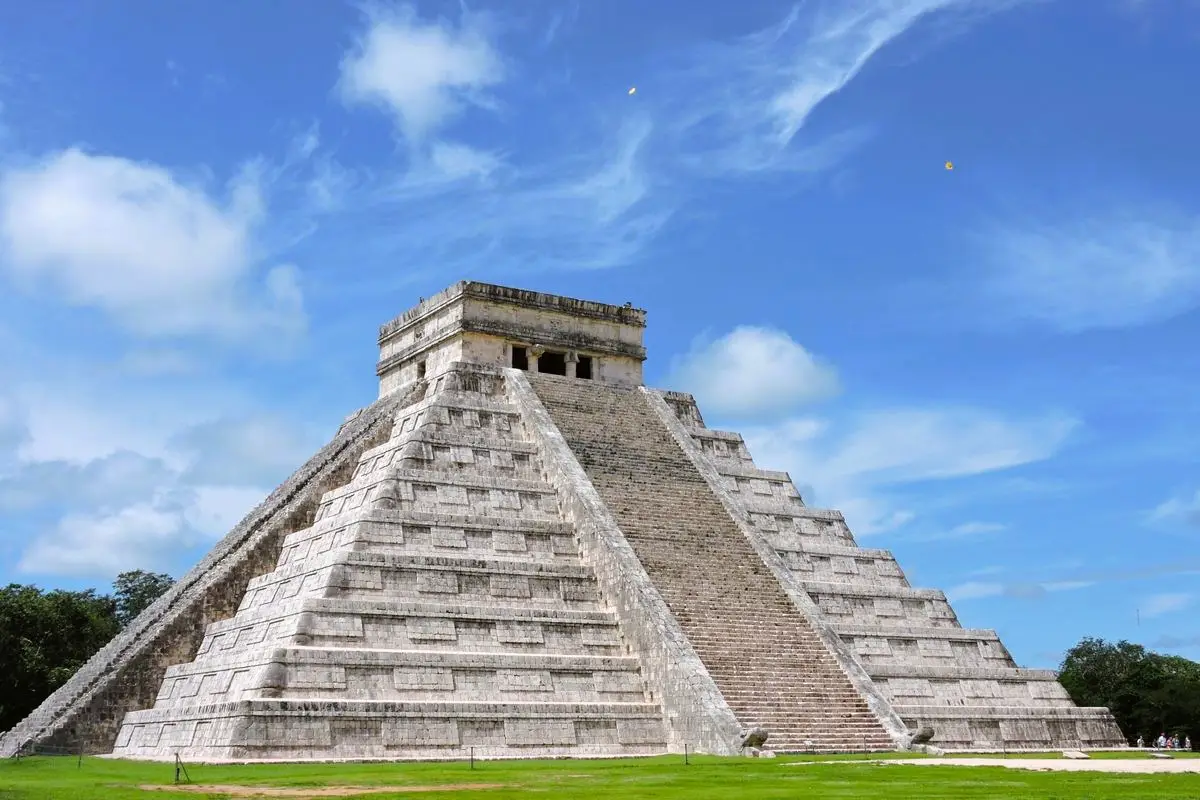
- Destination: El Castillo Pyramid (Temple of Kukulcán), Chichen Itza
- Location: Tinum Municipality, Yucatán, Mexico, near the town of Pisté
- Recognition: UNESCO World Heritage Site; New7Wonders of the World
- Visit duration: 3-4 hours for a thorough walk of the main plaza and outer structures
- Opening hours: Daily, 08:00 to 16:00 (ticket booths and access)
- Weekly closure: None; open every day of the year, including public holidays
- Entry fee: Tiered pricing — Foreign Tourist Tier, Domestic Tier, and Concession Tier for students, seniors, and residents
- Best visiting time: 08:00 to 10:00, before tour buses arrive from the coast
- Official website: inah.gob.mx (Instituto Nacional de Antropología e Historia)
Overview
Chichen Itza is a federally protected archaeological zone jointly managed by two government bodies: INAH, the national heritage institute, and CULTUR, the Yucatán state tourism agency. That dual management shapes almost every logistical decision a visitor makes, from ticket lines to payment methods.
This Chichen Itza Visiting Guide is built for travelers who need an execution plan, not a history lesson. It answers the questions that actually cause stress on site: which gate to use, how the two-part ticket system works, what gets confiscated at security, and how to time arrival against bus traffic from Cancún and the Riviera Maya.
Expect a multi-stage entry process. Visitors pass through a ticket booth, a bag check, and a turnstile before reaching the main plaza. The site draws over two million visitors annually, and crowd density shifts sharply by hour. Morning arrival changes the entire experience; midday arrival means navigating dense foot traffic around the central pyramid.
Planning The Visit
- Best season: November through April The dry season keeps humidity lower and reduces the chance of afternoon downpours common from June to October.
- Best time of day: First two hours after opening Tour buses from Cancún and Playa del Carmen typically reach the site between 10:00 and 11:00, so the 08:00-10:00 window has visibly thinner crowds.
- Average visit duration: 3-4 hours This covers the main pyramid, the Great Ball Court, the Temple of Warriors, and the Sacred Cenote at a walking pace, not a run.
- Peak crowd periods: Midday (11:00-14:00) and the spring and autumn equinoxes The equinox draws crowds specifically to watch a shadow effect on the main pyramid’s staircase; INAH runs a separate crowd-control operation on those dates with adjusted gate assignments.
- Weather considerations: Minimal shade across the site Temperatures regularly exceed 35°C in the exposed limestone plaza; cloud cover offers little relief since most structures sit in open ground.
- Advance booking recommendations: Book at least 48 hours ahead during equinox weeks and December-January high season Standard visits rarely require advance booking, but equinox dates see ticket booth queues extend past an hour without pre-purchase.
Getting There
Every Chichen Itza visit begins with one decision: whether to approach from Mérida (120 km west) or Cancún (200 km east). That choice determines your transportation options, departure time, and ultimately how smoothly the rest of your visit unfolds.
By Air
No commercial airport operates directly at the site. A small local airfield exists but handles no scheduled passenger service.
- Closest commercial airport: Mérida International Airport (MID), ~120 km west
- Second option: Cancún International Airport (CUN), ~195-200 km east
- Mérida suits travelers arriving from within Mexico or connecting through Mexico City
- Cancún suits most international arrivals due to direct long-haul connections
By Train
The Tren Maya line serves the region with a dedicated station for the site.
- Station name: Estación Tren Maya Chichén Itzá
- Service connects Mérida (Teya station) and Cancún, with stops toward Valladolid
- The station sits apart from the archaeological zone entrance
- A shuttle bus connects the platform to the main gate; this is not optional walking distance
- Departures run several times daily in each direction; schedules should be confirmed close to the travel date since frequency has changed since the line’s launch
By Road
- From Mérida: ~120 km via Highway 180, roughly 1.5-2 hours by car
- From Cancún: ~195-200 km via toll Highway 180D, roughly 2.5 hours; the free 180 route adds significant time
- From Valladolid: ~40 km, the shortest approach for overnight stays
- ADO operates direct bus service from Mérida’s CAME terminal, Cancún’s downtown terminal, and Playa del Carmen’s ADO terminal
- Direct buses from Cancún and Playa del Carmen typically run once or twice daily with fixed early-morning departure times
- Mérida offers more frequent departures throughout the day
Local Transport, Parking, and the Final Stretch
- On-site parking operates adjacent to the visitor center, a short walk from the ticket booths
- Bus arrivals (ADO and tour coaches) drop passengers at a dedicated on-site bus stop
- Walking distance from parking or the bus stop to the ticket booths runs under 10 minutes
- No public transit hub sits within walking distance beyond the Tren Maya shuttle drop-off and the ADO stop
Entry Process
- Multiple numbered gates provide access; gate assignment can shift during high-traffic events like the equinox
- Standard visits generally funnel through the main visitor center entrance near the parking area
- Ticket verification happens at the booth before the turnstile; both the INAH and CULTUR receipts should be retained
- Photo ID is not typically required for standard adult tickets, but discounted-tier tickets require ID matching the concession category
- Bag inspection happens at a security checkpoint immediately past the ticket booth
- Queue times run under 15 minutes before 09:00 and can extend past an hour during equinox operations or midday bus arrivals
- Security screening checks specifically for drones, tripods, and professional camera equipment
⚠️ Warning: Re-entry policy is restrictive. Once a ticket is scanned and a visitor exits the site, that same ticket generally does not permit re-entry. Plan the full visit before leaving through the exit turnstile.
Tickets & Booking
Booking Tickets Online or at the Gate
Admission is split into two separate charges collected together at the gate: a federal INAH portion and a Yucatán state CULTUR portion. Both are bundled into a single tiered price at checkout.
| Ticket Tier | Who Qualifies | Notes |
|---|---|---|
| Foreign Tourist Tier | Non-Mexican nationals | Standard rate, no discount (documentation needed) |
| Domestic Tier | Mexican citizens with valid ID | Requires INE or equivalent government ID at the booth |
| Child/Student/Senior Concession Tier | Children, students, seniors, and Yucatán residents with proof | ID or documentation checked at time of purchase |
- Tickets can be purchased at the physical booth on arrival or through the official government booking channel in advance
- Third-party resellers also sell tickets bundled with guides or transport, but these carry separate service charges beyond the base admission
- Cash in Mexican pesos remains the most reliable payment method at the booth
- Card payment terminals exist but experience intermittent outages, particularly in humid conditions
- Carrying backup cash avoids delays if a card terminal fails mid-transaction
💡 Tip: Sunday admission is free for Mexican citizens and legal residents with valid ID. This significantly increases domestic visitor volume, so international travelers should avoid Sunday visits unless flexibility isn’t a concern.
Night Viewing
An official evening sound-and-light event, “Noches de Kukulcán,” runs at the site on a separate ticket from standard daytime admission. It operates on select evenings rather than nightly, and scheduling has varied by season. This event requires its own booking through the official state-run ticketing channel and is not covered by a standard daytime entry ticket.
Visitor Guidelines
- Dress code: There is no formally enforced dress code at security, but comfort-driven choices matter more here than at sites with shade cover.
- ✅ Lightweight, breathable clothing recommended for heat
- ✅ Closed-toe shoes recommended for uneven limestone paths
- Photography/videography rules: Personal phone and handheld camera photography is permitted without a permit. Tripods, monopods, gimbals, and telephoto lenses associated with professional setups require advance permit arrangement through INAH, which is difficult to secure on short notice.
- Allowed/Prohibited items (strict list):
- ✅ Allowed: Phones and small handheld cameras
- ✅ Allowed: Reef-safe sunscreen and insect repellent
- ✅ Allowed: Small backpacks and daypacks
- ✅ Allowed: Sealed water bottles
- ❌ Prohibited: Drones of any size without exceptions
- ❌ Prohibited: Tripods and monopods without a pre-arranged INAH permit
- ❌ Prohibited: Bluetooth speakers and amplified audio devices
- ❌ Prohibited: Alcohol, cigarettes, cigars, lighters or matches
- ❌ Prohibited: Climbing on or touching any structure
- Bag policies: Large bags and backpacks beyond daypack size face restriction at the security checkpoint. Staff reserve the right to inspect any bag before entry.
- Food & drink rules: Food consumption is not permitted inside the archaeological zone itself. Water is allowed and strongly advised given the lack of shade.
- Expected behavior: Structures cannot be touched or leaned against. Loud music and disruptive conduct are treated as grounds for staff intervention.
- Special restrictions / guides & photographers: Independent licensed guides operate on-site and can be engaged near the entrance. Commercial filming of any kind requires a separate permit arranged directly with INAH’s legal affairs coordination in advance.
Accessibility & Visitor Facilities
| Facility | Status |
|---|---|
| Wheelchair access | ✅ Main plaza paths paved and navigable |
| Toilets | ✅ Located near the visitor center |
| Drinking water | ✅ Sold near the entrance; not sold deep inside the zone |
| Cloakrooms/lockers | ✅ Available near the visitor center |
| Seating | ✅ Limited benches near the main plaza |
| First aid | ✅ On-site medical station near the visitor center |
| Parking | ✅ On-site lot adjacent to ticket booths |
- Wheelchair access: The central plaza and main sightlines to the pyramid sit on paved, level ground. Side paths toward outlying structures include uneven limestone sections that limit wheelchair navigation without assistance.
- Navigability for elderly visitors and children: The main loop is flat and manageable at a slow pace; distances between major structures run several hundred meters each with no shade cover.
- Toilets: Positioned at the visitor center complex before the ticket turnstile, not distributed deep within the archaeological zone.
- Drinking water availability: Vendors sell bottled water near the entrance and along the main path; supply thins toward the site’s outer sections.
- Cloakrooms/lockers: Bag storage exists for items restricted at security, useful for travelers carrying tripods or oversized bags who still want entry.
- Seating: Benches cluster near the main plaza; the outer loop toward the Sacred Cenote has minimal formal seating.
- First aid: A staffed medical point operates near the visitor center for heat-related incidents, which INAH staff report as the most common on-site issue.
- Parking: Standard lot adjacent to the visitor center handles private cars, rental vehicles, and tour coaches in separate zones.
During The Visit
Past the security checkpoint, the path opens directly onto the main plaza with the central pyramid as the focal sightline. Most visitor flow follows a loop: the pyramid first, then the Great Ball Court to the west, the Temple of Warriors to the east, and the Sacred Cenote via a separate path north of the main plaza.
- The area immediately around the main pyramid experiences the heaviest bottleneck between 10:00 and 13:00
- Photography lines form at the classic front-facing angle of the pyramid; side approaches offer clearer shots with less waiting
- The Great Ball Court draws steady but lighter traffic and offers a useful break from the main plaza crowd
- The Sacred Cenote path adds roughly 20-30 minutes round trip and sees noticeably fewer visitors than the central structures
- No structure permits climbing; visitor flow around the main pyramid is entirely ground-level circulation, consistent with the accessibility notes above
- Shade is essentially absent until reaching the tree line near the Sacred Cenote path, making that stretch a practical rest point
Things Worth Knowing
- The two-receipt ticket system (INAH plus CULTUR) means visitors should keep both stubs; staff may request either one for re-entry disputes or facility access
- Card payment reliability drops during humid afternoon hours; this is a recurring and not an occasional issue at the booth
- The equinox operation changes gate assignments and exit routing specifically for buses, vans, and sprinters, separate from standard pedestrian flow
- Vendors along the approach road sometimes offer “faster line” services with no official standing; queue speed does not change by paying a roadside tout
- The Tren Maya shuttle bus link is a mandatory connection, not a walkable option, for train arrivals
- Stray dogs are present on-site despite not being an official presence; feeding or engaging them draws staff intervention
💎 Expert Insight: Chichen Itza’s massive, unshaded central plaza catches a lot of first-timers off guard. The heat radiates off the limestone exactly the way it does off the desert floor at the Great Pyramids of Giza. If you are planning to tackle Egypt’s plateau next, treat Mexico as your dry run: lock in your early arrival time, bring double the water you think you need, and never expect to find shade once you pass the security gates.
Official Resources
- Official website: inah.gob.mx
- Official booking page: Official entry tickets are primarily purchased in person at the gate via the (INAH) ticket office
- Official visitor information via e-mail: direccion.yuc@inah.gob.mx / visitas.chichenitza@inah.gob.mx
Disclaimer
Operational details for archaeological sites change without extended notice, including hours, fee tiers, gate assignments, and seasonal event schedules. Travelers should verify time-sensitive specifics through official INAH and CULTUR channels shortly before travel rather than relying solely on this or any third-party guide.