Kinkaku-ji Visitor Guide: Ticket Prices, Timings, Rules and Critical Errors to Avoid
👀 At a Glance
| 📍 | Destination: Kinkaku-ji Temple (Golden Pavilion) |
| 📌 | Location: 1 Kinkakuji-cho, Kita Ward, Kyoto, Japan |
| 🏛️ | Recognition: UNESCO World Heritage Site (Historic Monuments of Ancient Kyoto) |
| ⏱️ | Visit duration: 30–60 minutes |
| 🕒 | Opening hours: 9:00 AM–5:00 PM daily |
| 📅 | Weekly closure: None — open every day of the year |
| 🎟️ | Reservation required: No advance or online booking; gate purchase only |
| 💴 | Entry fee: ¥500 general, ¥300 primary/middle school students |
| 🌤️ | Best visiting time: Weekday mornings at opening, or the final hour before closing |
| 🌐 | Official website: Kinkaku-Ji – Official Page |
📖 Overview
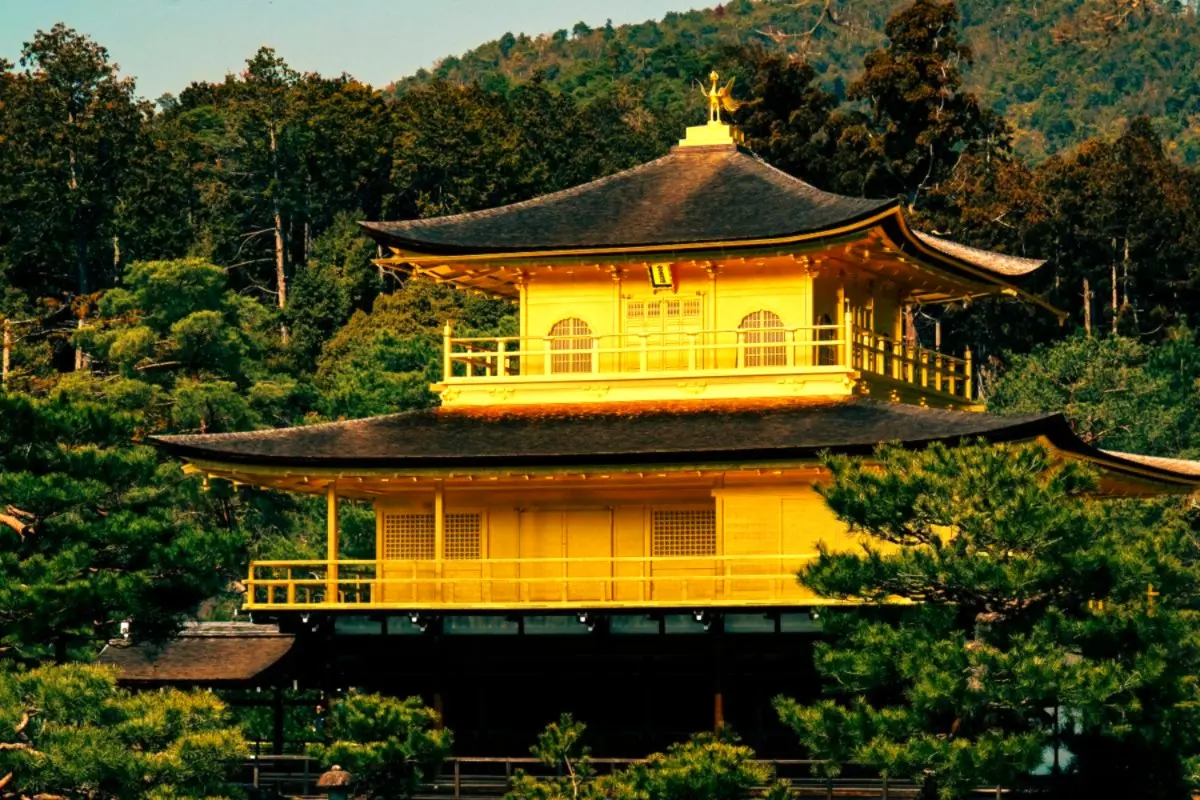
Kinkaku-ji functions as a fixed-route, exterior-only viewing site. Visitors walk a single one-way garden path, view the gold-leafed pavilion across a pond, and exit through a small teahouse and shop area. There is no interior access to the pavilion itself.
This Kinkaku-ji visitor guide serves travelers to build a Kyoto itinerary who need arrival timing, transit routing, and gate logistics rather than architectural history. Kinkaku-ji is not a browsing site. It rewards travelers who arrive with a clear entry plan and a specific arrival window.
Visitors should expect a compact, high-density crowd flow. The grounds cover a small area relative to visitor volume, and the walking path funnels everyone toward the same two or three photo points. Peak-season midday visits mean shoulder-to-shoulder movement along the pond overlook. The temple’s operational simplicity — one gate, one route, one payment method — is the main planning variable, not the site’s size.
🗓️ Planning The Visit
- Best season: Spring (late March–early April) and autumn (mid-November–early December) draw the heaviest visitor volume alongside the best foliage. Winter offers the lowest crowd density and occasional snow-dusted photo conditions.
- Best time of day: The first 30 minutes after the 9:00 AM opening has the lightest crowds before tour groups arrive. The final hour before 5:00 PM closing is the second-best window.
- Average visit duration: Most travelers complete the loop in 30–45 minutes. Adding time at the teahouse or shop area extends this to 60 minutes.
- Peak crowd periods: Weekends, national holidays, and the two-week windows around peak cherry blossom and peak autumn foliage produce the highest density. Midday (11:00 AM–3:00 PM) sees the heaviest tour bus arrivals year-round.
- Weather considerations: Summer afternoons in Kyoto regularly exceed 33°C with high humidity, making morning visits more comfortable. Winter can bring light snow, which increases photo interest but also creates slick gravel sections on the garden path.
- Advance booking recommendations: None applies as Kinkaku-ji sells tickets only at the gate with no online reservation system. Travelers should instead plan arrival timing rather than booking, since timing is the only controllable variable.
📍 Getting There
✈️ By Air
International arrivals land at Kansai International Airport (KIX). From KIX, the JR Haruka limited express runs directly to Kyoto Station in roughly 75–80 minutes. A discounted one-way Haruka ticket is available exclusively to foreign passport holders through JR West. Domestic arrivals often land at Osaka Itami Airport, connecting to Kyoto Station via the Osaka Monorail and JR or subway lines, roughly 60–75 minutes total.
🚇 By Train
No train line reaches Kinkaku-ji directly. The nearest rail option is the Keifuku Randen tram to Kitano-Hakubaicho Station, followed by a 15–20 minute walk or short taxi to the temple. For most travelers, a direct city bus from Kyoto Station is faster than any train-based route.
🛣️ By Road
Kinkaku-ji sits in northwestern Kyoto, roughly 30–45 minutes by car or taxi from central Kyoto depending on traffic. Taxis from Kyoto Station run approximately ¥1,500–¥2,500 one-way. The temple operates an on-site paying car park with 250 spaces, open 8:40 AM–5:10 PM.
Local Transport, Parking, and the Final Stretch
- Kyoto City Bus 205 runs directly from Kyoto Station Bus Stand to the Kinkakuji-michi stop.
- Journey time on Bus 205 runs 35–45 minutes depending on traffic.
- From the Kinkakuji-michi stop, it is a 5-minute walk north to the entrance gate.
- On-site parking costs ¥400 for the first 60 minutes, then ¥200 per half hour for passenger cars.
- Nearest subway connection is Kitaoji Station on the Karasuma Line, then a transfer to Bus 204 or 205.
💡Tip: Buses run every 10–15 minutes on weekdays and more frequently on weekends, so missing one costs little time — but board early in the queue at bus stand, since the line forms fast during peak season.
➡️ Entry Process
Kinkaku-ji has a single public entrance gate on its eastern side, reached directly from the Kinkakuji-michi bus stop or the on-site car park. There is no alternate gate and no fast-track lane.
- Ticket purchase happens at the gate ticket window, not a separate booth.
- The ticket doubles as an ofuda; a printed paper temple charm, not a torn stub.
- No ID check applies for standard adult or child admission.
- Disabled visitors and certified medically disabled visitors can request a fee exemption by showing certification at arrival.
- Queue length scales directly with tour bus arrivals; midday queues can run 10–20 minutes in peak season.
- No dedicated security screening or bag X-ray operates at the gate.
- Re-entry is not permitted once a visitor exits through the far gate — the route is one-way only.
⚠️Warning: The exit gate is different from the entry gate. Visitors who leave items in a car or bag outside cannot return through the entrance to retrieve them.
🎫 Tickets & Booking
| Tier | Price (JPY) | Applies To |
|---|---|---|
| General Admission Tier | ¥500 | High school age and above |
| Child/Student Concession Tier | ¥300 | Primary and middle school students |
| Disability Exemption Tier | Free | Certified disabled visitors, with proof shown at gate |
- Payment is cash-only in Japanese yen — credit and debit cards are not accepted at the ticket window.
- No nearby ATM serves the temple grounds, so travelers should withdraw yen before arrival.
- Groups of 30 or more should enter together as a group; no group discount applies.
- Fee amounts can change temporarily during special exhibition periods.
📝Note: Unlike many major Japanese heritage sites, Kinkaku-ji uses a single flat-rate tier for all visitors regardless of nationality — there is no separate foreign tourist pricing.
Night Viewing
Kinkaku-ji does not offer night viewing or extended evening hours. The site closes at 5:00 PM year-round with no seasonal illumination events.
📋 Visitor Guidelines
- Dress code: No formal dress code is enforced for general grounds access, since visitors do not enter the pavilion or main hall interior. Casual and seasonal clothing permitted throughout the grounds.
- Photography/videography rules:
- ✅Photography is permitted throughout the outdoor garden route, including of the pavilion exterior.
- ❌ Tripods and drone use are not permitted without prior temple authorization.
- Allowed/Prohibited items (strict list):
- ✅ Allowed: Personal cameras and phones for photography
- ✅ Allowed: Service dogs
- ❌ Prohibited: Eating or drinking within the temple grounds
- ❌ Prohibited: Smoking anywhere on-site
- ❌ Prohibited: Non-service pets outside of a carrier bag or cage
- Bag policies: No luggage storage or coin lockers exist on-site. Large bags or suitcases should be stored at a Kyoto Station locker before travel to the temple.
- Food & drink rules: No area within the grounds permits eating a meal, including packed lunches; food consumption is restricted to shops just outside the gate.
- Expected behavior: Kinkaku-ji remains an active Rinzai Zen temple with ongoing religious use, so quiet, respectful movement is expected near any ceremonial areas.
- Special restrictions / guides & photographers: Independent professional photography for commercial purposes requires advance contact with the temple office; casual personal photography needs no permit.
♿ Accessibility & Visitor Facilities
| Facility | Status |
|---|---|
| Wheelchair access | ✅ Paved path to the pavilion viewpoint |
| Garden beyond pavilion | ❌ Not barrier-free past this point |
| Toilets | ✅ On-site, including accessible units |
| Drinking water | ❌ No public fountains on the garden route |
| Cloakrooms/lockers | ❌ Not available on-site |
| Seating | ❌ Minimal fixed seating along the route |
| First aid | ✅ Available on request at the entrance office |
| Parking | ✅ On-site paid parking; 250 cars parking space |
- Wheelchairs and strollers can travel the path up to the main pavilion viewpoint.
- Past the pavilion, stone steps make the remaining loop inaccessible to wheelchairs.
- Wheelchair users, stroller users, or visitors with limited mobility must turn back at that point and exit via the entrance rather than completing the loop.
- Loaner wheelchairs are available at the gate with no reservation needed, subject to availability.
👣 During The Visit
Visitors pass through the entry gate directly onto the one-way garden path, with the first clear pavilion view opening within roughly two to three minutes of walking.
- The pond-edge overlook is the primary bottleneck, where nearly all visitors stop for photos simultaneously.
- Wheelchair users, stroller users, and visitors with mobility limitations should treat this overlook as the practical end of the accessible route.
- Past the overlook, the path climbs gently uphill through wooded garden sections with less crowding.
- Fudo-do Hall sits near the top of the garden trail as a smaller secondary stop.
- The route concludes at a teahouse and small shop area near the exit gate.
- Travelers photographing the reflection shot should position on the pond’s northeast edge, where the crowd naturally thins after the main overlook.
- Total walking distance is short, but gravel and uneven stone sections demand for closed-toe shoes.
🔖 Things Worth Knowing
- The ticket itself is a paper ofuda charm, not a scannable ticket stub.
- Rapid-service 205 buses skip the Kinkakuji-michi stop entirely; only the standard 205 service stops there.
- The subway-plus-bus route via Kitaoji Station often runs faster than the direct bus during midday traffic congestion, despite requiring a transfer.
- Pairing this visit with nearby Ryoan-ji (rock garden) or Ninna-ji works well, since both sit within a short bus or taxi ride west of the temple.
- Snow days sharply reduce crowd volume and produce the most sought-after contrast photos of the gold pavilion.
🔗 Official Resources
- Official Website: Kinkaku-Ji – Official Page
- Ticket Reservations: Not applicable — gate purchase only, no online system
- Visitor Information: Access – Kinkaku-Ji
ℹ️ Disclaimer
Operational details such as hours, fees, and transit routes may change without notice. Travelers should verify time-sensitive information through official sources before travel.