Great Wall of China Visitor Guide: Tickets, Entry Rules, Timings & Typical Mistakes
At a Glance ⭐
- Destination: The Great Wall of China, Badaling Section
- Location: Yanqing District, Beijing, China
- Recognition: UNESCO World Heritage Site | New7Wonders of the World
- Visit duration: 2–4 hours on-site
- Opening hours: 06:30–16:30 (April–October); 07:30–16:00 (November–March)
- Weekly closure: Never Closed, open year-round, including public holidays
- Reservation required: Yes (mandatory)
- Entry fee: Tiered pricing by season and visitor category (see Tickets & Booking)
- Best visiting time: Early morning on weekdays, outside Chinese national holidays
- Official website: Badaling Great Wall Scenic Area
Overview
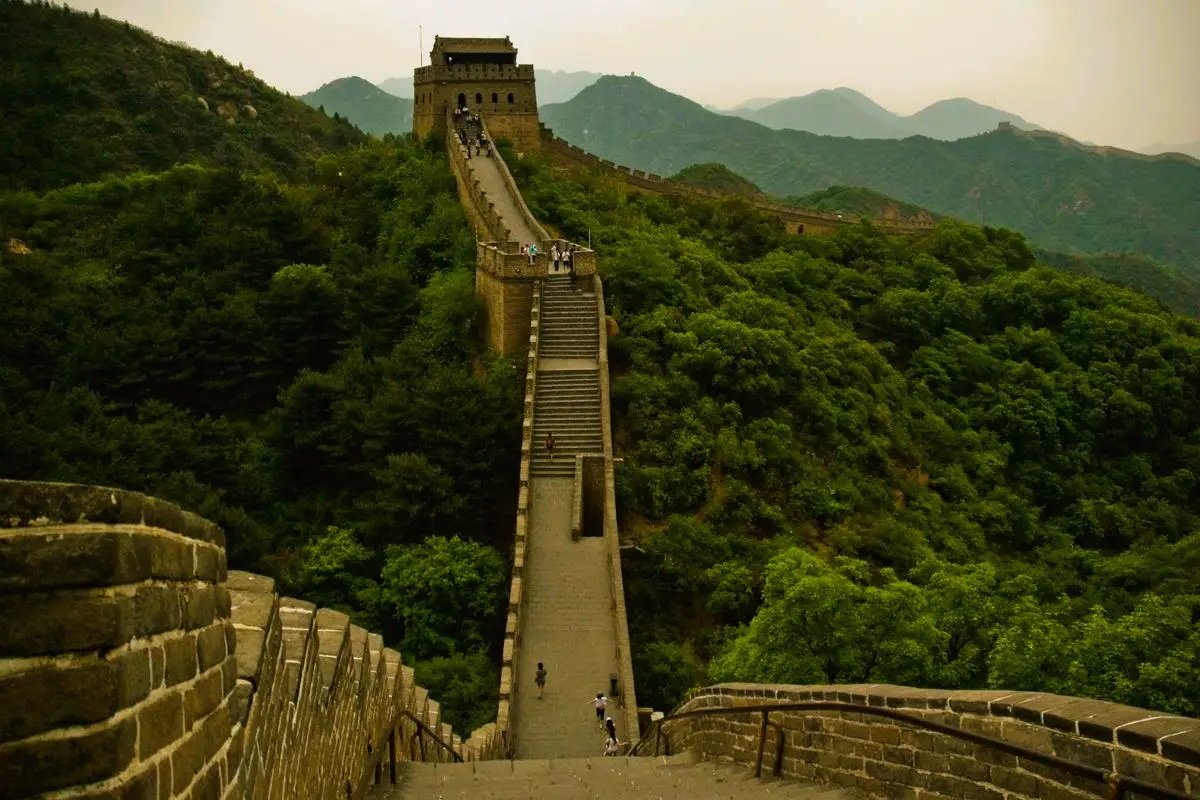
Badaling is the best-developed, most-visited section of the Great Wall system near Beijing. It functions as a managed scenic area with a fixed daily visitor cap, mandatory advance ticketing, and airport-style security screening at entry. This Great Wall of China Visitor Guide is built for travelers who need to plan and complete the visit smoothly the first time: booking a slot before arrival, choosing the right gate and route, and navigating the site that regularly processes tens of thousands of people in a single day.
Visitors should expect a multi-stage process rather than a simple walk-up attraction. Getting in requires a pre-booked ticket tied to a passport or ID number, a second verification step at a service window for foreign passport holders, and a security check before reaching the wall itself. The physical site splits into a North Route and a South Route, each with different crowd levels, incline, and cable car access. Travelers arriving without a plan for which route to take, and without a reservation already secured, face the highest risk of delay or being turned away at capacity.
Planning The Visit
- Best season: Spring (April–May) and autumn (September–October) bring stable weather and moderate crowds. Summer school holidays push daily numbers toward the visitor cap.
- Best time of day: Entering at opening time clears the wall of tour-bus groups for roughly 90 minutes before density builds toward mid-morning.
- Average visit duration: Most travelers spend 2–4 hours walking the wall itself, longer if combining with the on-site Great Wall Museum or a Ming Tombs stop.
- Peak crowd periods: Weekends run noticeably busier than weekdays. National Day Golden Week (early October), Spring Festival, and the May Labour Day holiday bring the heaviest volume of the year.
- Weather considerations: Elevation runs several degrees cooler and windier than downtown Beijing. Winter brings snow and ice on stair sections; summer brings sudden thunderstorms on exposed ridgelines.
- Advance booking recommendations: Tickets release on a rolling window ahead of the visit date. Booking as early as the window allows is strongly advised during summer and national holiday periods, when the daily cap is reached before midday.
Getting There
By Air
Beijing Capital International Airport and Beijing Daxing International Airport both serve the capital; neither has a direct transfer to Badaling. Travelers connect via the Airport Express rail line into central Beijing, then transfer to one of the ground or rail options below.
By Train
- Badaling Great Wall Railway Station is a dedicated high-speed rail stop built directly beneath the site.
- High-speed trains depart from Beijing North Railway Station and Qinghe Railway Station, with a travel time of roughly 20–40 minutes.
- The station sits a 2–3 minute walk from the cable car terminal and roughly 800 meters from the main climbing entrance.
- A separate, older suburban line (the S2) also serves Badaling Railway Station, a different stop from the high-speed terminal.
- As of late October 2025, the S2 line’s departure point shifted from Huangtudian Station to Nankou Station due to ongoing rail construction; travelers should confirm the current departure station before planning this route, since Nankou sits considerably farther from the city center than the former Huangtudian stop.
- S2 seating is unassigned and tickets are sold same-day at the station only, not online.
By Road
- Highway access runs via the G6 Jingzang Expressway, Exit 58.
- Driving time from central Beijing runs 1–1.5 hours outside rush hour, longer with holiday traffic.
- Direct tourist coach services run from Deshengmen (accessible via metro Line 2, Jishuitan Station) and from Qianmen, both terminating near the site entrance.
- Regular city bus routes also connect from Deshengmen, running at intervals during morning peak hours.
Local Transport, Parking, and the Final Stretch
- Free shuttle buses connect the main parking areas, both route entrances, the railway station, and the cable car terminals.
- Visitors arriving by car use designated scenic-area parking lots near the South Square; overflow capacity tightens on peak weekends.
- Walking distance from the high-speed rail station to the North Route entrance is approximately 800 meters, roughly 10–15 minutes on foot.
- Ride-hailing apps operate to Badaling, though some drivers hesitate to accept the distance and may need to be booked in advance rather than hailed on arrival.
Entry Process
- Two primary route entrances serve the site: North Route (steeper, more watchtowers, higher crowd density) and South Route (gentler incline, fewer visitors).
- All visitors need a valid ticket linked to real-name ID before reaching the gate; there is no walk-up purchase without prior registration.
- Foreign passport holders who booked online must first exchange their booking confirmation for a printed ticket at the designated service window near the entrance, using the original passport.
- Domestic visitors using Chinese ID typically scan directly at the gate without a separate exchange step.
- Security screening (X-ray bag check and metal detector) occurs before entry to the wall itself, standard at every entrance.
- Re-entry on the same ticket is generally not permitted once a visitor has exited the scenic area; the ticket books entry for a single continuous visit.
⚠️ Warning: Name mismatches between the booking and the passport presented at the gate can result in denied entry. The name on the reservation must match the travel document exactly.
Tickets & Booking
Booking Tickets Online or at the Gate
Tickets are released on a rolling window and must be booked with real-name ID or passport information before arrival. The official booking portal operates in Chinese only; travelers who do not read Chinese typically use a translation tool to navigate it. A WeChat mini-program booking channel also exists as an official alternative.
| Ticket Category | Applies To | Notes |
|---|---|---|
| Foreign Tourist Tier | Adult foreign passport holders | Standard daytime admission |
| Domestic Tier | Chinese ID holders | Standard daytime admission |
| Child/Student Concession Tier | Minors and eligible students | Reduced or waived per published age/height rules |
| Senior Concession Tier | Visitors above the published senior threshold | Reduced or waived admission |
- Online payment on the official portal is generally limited to domestic mobile payment platforms; foreign visitors without a linked account often book through an authorized travel platform or purchase at the gate with a passport instead.
- Height-based concessions apply separately from age-based concessions for younger children; the exact cutoff should be confirmed at booking, since it determines whether a free paper ticket still needs collecting at the service window.
- Cable car and toboggan/slide access are sold separately from wall admission and are not included in the base entry ticket.
Night Viewing
A seasonal night tour operates on the North Route, typically running from spring through early autumn, with illuminated wall sections and extended cable car hours after dark. Night admission is ticketed and tiered separately from daytime entry, with its own concession rules for younger children. Night viewing is not available year-round; travelers visiting in winter should plan around daytime hours only.
Visitor Guidelines
- Dress code:
- ✅ Closed-toe walking shoes strongly recommended for stair sections
- ✅ Layered clothing appropriate given the temperature gap versus downtown Beijing
- ❌ Loose sandals or heels not advised given uneven, worn stone steps
- Photography/videography rules: Personal photography and video are permitted throughout the wall and museum areas. Commercial filming, professional rigs, and drone operation require separate authorization arranged in advance, not obtainable at the gate.
- Allowed/Prohibited items (strict list):
- ✅ Allowed: Personal cameras and phones
- ✅ Allowed: Small backpacks and day bags
- ✅ Allowed: Personal water bottles and snacks
- ❌ Prohibited: Drones of any kind, confiscated on discovery at the security check
- ❌ Prohibited: Large tripods and bulky filming equipment without prior authorization
- ❌ Prohibited: Oversized luggage or suitcases
- ❌ Prohibited: Sharp objects and items restricted under standard Chinese public-venue security rules
- Bag policies: Bags pass through X-ray screening at the entrance alongside visitors; no separate bag-check counter exists for storage before entry.
- Food & drink rules: Personal snacks and water are permitted on the wall. No restaurants operate on the wall itself; dining options cluster near the entrance and parking areas only.
- Expected behavior: Visitors are expected to keep to marked pathways, avoid climbing on unrestored or barrier-marked wall sections, and follow staff directions during high-density periods on stairs and watchtowers.
- Special restrictions / guides & photographers: Independent local guides can be engaged at the entrance; professional photographers working for hire on-site typically need prior scenic-area authorization rather than informal solicitation.
Accessibility & Visitor Facilities
| Facility | Status |
|---|---|
| Wheelchair access | ✅ Ramps and a lift to the first watchtower area; further sections involve stairs |
| Toilets | ✅ Located near main gate, cable car stations, and select watchtower stops |
| Drinking water | ✅ Available at entrance-area vendors; none sold mid-wall |
| Cloakrooms/lockers | ❌ No formal on-wall storage; wheelchairs may need staff assistance for temporary placement near stair sections |
| Seating | ✅ Rest areas near the main entrance and cable car terminal |
| First aid | ✅ Medical stations present in the visitor services area |
| Parking | ✅ Designated scenic-area lots near South Square |
During The Visit
- After clearing security, visitors face an immediate choice between the North Route and South Route entrances.
- The North Route leads toward the higher, more photographed watchtower stretch and draws the bulk of tour groups; density builds fastest here after 9:00.
- The South Route offers a shorter, less crowded stretch with a gentler climb, suited to visitors prioritizing pace over watchtower count.
- Cable car and toboggan lines form their own separate queues at each terminal, independent of the wall-walking queue.
- The steepest, most bottlenecked stretch on the North Route sits between the first and the higher-numbered towers; visitors moving at a leisurely pace should budget extra time here during midday hours.
- Wheelchair users and visitors with limited mobility should plan to stop at the first watchtower area, consistent with the accessibility scope described above, rather than attempting the full ridge stretch.
- Watchtower viewpoints looking back along the ridge draw the heaviest photo-stop congestion; moving past the first two or three towers before pausing reduces time lost in bottlenecked spots.
Things Worth Knowing
- The South Route consistently runs quieter than the North Route at every hour of the day, making it the default choice for travelers prioritizing space over the highest watchtower views.
- The high-speed rail station beneath the site removes the need to walk from a distant parking lot, cutting the effective approach to a few minutes for train travelers.
- Booking through the official portal with only a foreign passport can be more difficult than through an authorized travel platform, since the primary payment methods favor domestic accounts.
- The S2 suburban line’s departure point has changed as of late 2025; travelers relying on older guides referencing Huangtudian Station should verify the current departure point before relying on this route.
- Free shuttle buses connecting the parking areas, station, and cable car terminals are easy to miss for first-time visitors who default to walking the full distance unnecessarily.
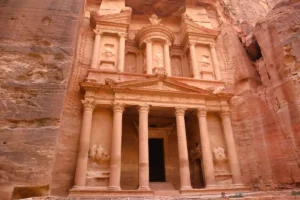
💎 Expert Insight: World-famous landmarks rarely manage visitors in the same way. Badaling relies on ticket reservations, timed entry, and visitor-cap controls to regulate heavy daily footfall. Other iconic heritage sites solve the same challenge differently. Petra, for example, spreads visitors across an extensive archaeological landscape rather than restricting movement after entry. Our Petra Visitor Guide explains how its ticketing system, trail network, and entry process differ from Badaling’s.
Official Resources
- Official website: Badaling Great Wall Scenic Area
- Ticket reservations: Badaling Great Wall Ticketing System
- Visitor information: Beijing Municipal Government – Badaling Great Wall
Disclaimer
Operational details such as hours, fees, closures, booking procedures, and transit routing are subject to change without notice. Travelers should verify all time-sensitive information through official sources before finalizing travel plans.