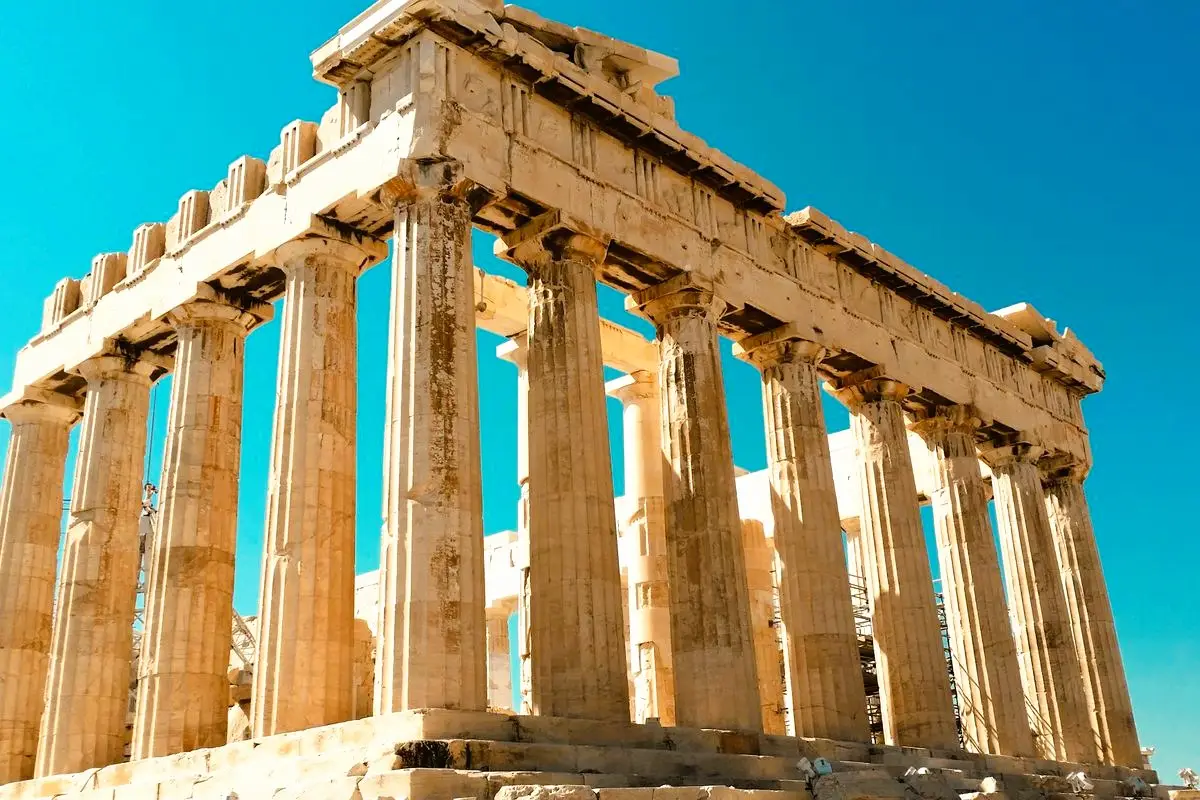
Acropolis of Athens Visitor Guide: Ticket Details, Entry Rules and Mistakes To Avoid
👀 At a Glance
| 📍 | Destination: Acropolis of Athens, Greece |
| 📌 | Location: Acropolis Hill, central Athens, Attica |
| 🏛️ | Recognition: UNESCO World Heritage Site (inscribed 1987) |
| ⏱️ | Visit duration: 1.5–2.5 hours for the main plateau alone |
| 🕒 | Opening hours: Summer 08:00–20:00 (last entry 19:30); winter 08:00–17:00 (last entry 16:30) |
| 📅 | Weekly closure: No weekly closure; closed on 6 fixed public holidays per year |
| 🎟️ | Reservation required: Yes, mandatory timed-entry slot year-round |
| 💶 | Entry fee: €30 standard adult ticket, flat rate year-round |
| 🌤️ | Best visiting time: 08:00 opening slot or after 17:00 in summer |
| 🌐 | Official website: Hellenic Heritage |
📖 Overview
The Acropolis of Athens is a limestone plateau roughly 156 metres above sea level, holding the Parthenon, the Erechtheion, the Propylaea gateway, and the Temple of Athena Nike. It is the single most-visited paid archaeological site in Greece. This Acropolis of Athens visitor guide is built for travelers who need an execution plan, not a history lesson: how the ticketing system actually works, which entrance to pick, what security allows through the gate, and how the site behaves once foot traffic peaks.
Expect a multi-stage process: online reservation, a specific hourly window, a security check at the turnstile, then an open-air walk across uneven ancient marble with almost no shade. The site operates on a hard daily visitor cap with slot-based access, so arrival planning matters more here than at most landmarks. Readers who need only the fastest path to a ticket and gate should jump to Getting There and Entry Process; readers assembling a full day itinerary should start with Planning The Visit.
🗓️ Planning The Visit
- Best season: April–May and September–October combine milder temperatures with lower visitor volume than the June–August peak.
- Best time of day: The 08:00 opening slot draws the smallest crowds and avoids direct midday sun on the unshaded plateau.
- Average visit duration: Most visitors spend 1.5–2.5 hours on the main plateau; adding the north and south slopes extends this to 3+ hours.
- Peak crowd periods: 10:00–14:00 sees the heaviest concentration, driven by mid-morning cruise-ship groups and tour buses arriving in waves.
- Weather considerations: Marble becomes slippery when wet, including from morning dew; summer heat routinely exceeds 35°C with no shade cover on-site.
- Advance booking recommendations: Book 1 week ahead for shoulder season; 2–3 weeks ahead for July–August, since morning slots sell out first.
⚠️ Warning: Once a timed-entry slot is booked and paid through the official portal, it is strictly non-refundable and cannot be cancelled. However, date and time changes are permitted up to 2 hours before your visit, subject to availability.
📍 Getting There
✈️ By Air
Athens International Airport (Eleftherios Venizelos, code ATH) sits roughly 33 km from the Acropolis. Metro Line 3 (blue line) runs directly from the airport to Syntagma station, then requires a change to Line 2 (red line) toward Akropoli station. The airport-to-city metro journey runs about 45 minutes plus interchange time. A dedicated airport express bus (X95) also connects to Syntagma Square, from where the Acropolis is a 15-minute walk.
🚇 By Train
Athens has no mainline rail station adjacent to the Acropolis; the relevant network is the metro. Akropoli station on Line 2 (red line) is the closest stop, roughly 5 minutes on foot to the south slope entrance. Monastiraki station, served by both Line 1 (green) and Line 3 (blue), sits about 10–15 minutes on foot from the main west entrance via Plaka or Anafiotika.
🛣️ By Road
Central Athens has narrow, largely pedestrianized streets around the hill, and there is no dedicated visitor parking lot at either Acropolis entrance. Paid parking garages operate in the surrounding Koukaki and Makrygianni districts. Taxis from most central Athens hotels to the site cost approximately €6–10; from the airport, fares typically run €40+ during the day (05:00–24:00) and €55+ at night (midnight to 05:00). Traffic does not affect this base price.
Local Transport, Parking, and the Final Stretch
- Bus routes 230, 035, 040, 550, and A2 stop within walking distance of the hill.
- Tram and trolleybus lines also serve the surrounding streets near Plaka and Koukaki.
- Free street parking in Koukaki is limited and time-restricted; paid garages are the reliable option.
- From Akropoli metro station, the walk to the south slope entrance is approximately 5 minutes uphill.
- From Monastiraki, the walk to the main west entrance runs 10–15 minutes through Plaka.
- Athens metro single tickets cost €1.40 and remain valid 90 minutes including transfers.
➡️ Entry Process
Two public entrances serve the site: the main west entrance (Propylaea, accessed from Plaka or Monastiraki) and the south slope entrance (near the Theatre of Dionysus, closest to Akropoli metro station and the Acropolis Museum). A third, separate entrance on the north slope exists specifically for visitors using the wheelchair lift. Ticketed companions/caregivers must enter through this specific gate alongside the wheelchair user. They cannot enter through the main gate and meet them at the top.
- Choose the south slope entrance when arriving via Akropoli metro; it is the shortest walk from the station.
- Choose the main west entrance when arriving from Plaka, Monastiraki, or joining a guided tour meeting point.
- Both entrances have historically shown similar queue lengths during peak hours; check both if flexible.
- Ticket QR codes are scanned at turnstiles; a printed or phone-displayed code is required.
- Government-issued photo ID may be requested when a reduced or free-entry ticket category was selected.
- Security screening includes a bag check; no dedicated metal detector line, but oversized items are inspected.
- Entry is honored from 15 minutes before to 15 minutes after the booked hourly slot, not beyond that window.
- There is no fixed time by which visitors must leave the hilltop once inside.
- Re-entry on the same ticket is not standard; the ticket is single-use for that time slot.
📝 Note: The 15-minute grace window applies only to entry timing, not to which entrance is used — either entrance accepts any valid ticket.
🎫 Tickets & Booking
| Ticket Tier | Price (EUR) |
|---|---|
| Standard Adult (Foreign Tourist Tier) | €30 |
| EU Senior (65+) / Non-EU Youth (6–25) Concession Tier | €15 |
| EU Citizens Under 25 / Children Under 5 (Domestic & Child Tier) | Free |
| Visitors with 80%+ disability plus one companion | Free |
The standard adult ticket covers the Parthenon, Erechtheion, Propylaea, Temple of Athena Nike, and the north and south slopes, including the Theatre of Dionysus. It does not include the Acropolis Museum (separate €20 ticket) or the Odeon of Herodes Atticus, which is viewable only from an overlooking path unless a ticketed performance is attended.
- Book online through the official Hellenic Heritage portal (hh.gr) for the base €30 rate. Avoid using search engines to find the official site, as several unauthorized resellers use official-sounding names and URLs to charge massive hidden markups.
- Third-party platforms (established tour and ticket resellers) charge roughly 10–20% above the official rate but often bundle an audio guide.
- On-site purchase remains possible at ticket kiosks near both entrances, but queues of 45 minutes to 2 hours are common in peak season.
- Reduced or free-entry categories must be selected at the time of booking; present the matching physical ID or documentation at the gate.
- Accepted payment methods online include major credit and debit cards; on-site kiosks accept cards and cash.
- No official combined ticket currently covers the Acropolis alongside other Athens archaeological sites; each site requires a separate ticket.
⚠️ Warning: Under the official portal’s terms, tickets bought in error (wrong date, wrong quantity) are non-refundable and non-transferable. Changes are allowed up to 2 hours before visit.
Night Viewing
The archaeological site itself does not offer paid night viewing or extended after-hours access; it closes at the fixed seasonal time with no ticketed evening slot. The Parthenon is illuminated externally after dark and remains visible from public viewpoints around the city after the site closes.
📋 Visitor Guidelines
- Dress code:
- ✅ Sturdy, closed-toe or rubber-soled shoes recommended for slippery marble.
- ❌ High heels and smooth-soled sandals are impractical and discouraged.
- Photography/videography rules: Personal photography is permitted throughout the site; tripods and commercial filming equipment require separate authorization.
- Allowed/Prohibited items (strict list):
- ✅ Allowed: Small backpacks and day bags, subject to a security check.
- ✅ Allowed: One litre or more of drinking water per person.
- ❌ Prohibited: Large backpacks, suitcases, and wheeled luggage.
- ❌ Prohibited: Food items and beverages other than water.
- ❌ Prohibited: Prams and strollers on the main plateau.
- Bag policies: Small bags pass through a visual or physical check at the entrance turnstile; oversized bags must be left off-site beforehand.
- Food & drink rules: Water is the only food or drink item permitted inside the archaeological zone.
- Expected behavior: Visitors must stay on marked paths and roped-off walkways; climbing on ruins or columns is not permitted.
- Special restrictions / guides & photographers: Licensed tour guides may lead groups without additional site authorization; commercial photography for sale or publication requires a separate government permit.
💡 Tip: Infants should be carried in a baby carrier rather than a pram, since strollers are not permitted on the uneven plateau surface.
♿ Accessibility & Visitor Facilities
| Facility | Status |
|---|---|
| Wheelchair access | ✅ North-slope glass lift to plateau level; advance call recommended |
| Navigability for elderly/children | ❌ Uneven ancient marble beyond the flattened lift-access zone |
| Toilets | ✅ Accessible restrooms at the south slope entrance |
| Drinking water | ✅ Bottled water sold at kiosks near both entrances |
| Cloakrooms/lockers | ✅ Free small-bag deposit available at both entrances |
| Seating | ❌ Minimal fixed seating on the open plateau |
| First aid | ✅ On-site staff present near main entrance areas |
| Parking | ❌ No dedicated visitor lot; nearby paid garages only |
The north-slope wheelchair lift accommodates up to two wheelchairs with companions, or 18 standing passengers, for the short ride to plateau level. Two designated routes on the north and east sides connect the lift to the Parthenon and Erechtheion viewing areas. Calling ahead (contact details published on the official Ministry of Culture site) is advised to confirm lift operation, since it has previously experienced weather-related outages.
👣 During The Visit
Past the entrance turnstile, the path climbs toward the Propylaea gateway before opening onto the main plateau. The Parthenon dominates the central and eastern portion of the plateau; the Erechtheion with its Caryatid porch sits to the north.
- Visitor flow generally moves in a loop: Propylaea → Parthenon → Erechtheion → Temple of Athena Nike → viewpoint areas.
- The area immediately around the Parthenon’s western facade sees the heaviest photo-stop congestion.
- The Erechtheion’s Caryatid porch is a secondary bottleneck, particularly midday.
- The south slope, including the Theatre of Dionysus, carries markedly fewer visitors than the main plateau.
- Visitors using the wheelchair lift join the plateau near the flattened lift-access zone rather than climbing through the Propylaea.
- Shade is effectively absent across the entire plateau; sun protection matters more than route planning in summer.
- The ancient marble is also blindingly reflective in the midday sun. Sunglasses are essentially a safety requirement, not just a comfort item, to avoid headaches and tripping on uneven stones.
- No formal one-way system is enforced; movement is self-directed within roped walkways.
🔖 Things Worth Knowing
- The south slope entrance and the main west entrance have shown comparable queue times in recent years; the older advice that one is consistently faster is outdated.
- Free general-admission days occur roughly five times per year plus the first Sunday of each month from November through March; these dates draw large crowds rather than offering a quieter visit.
- The combined multi-site ticket that once bundled the Acropolis with six other Athens archaeological sites was discontinued; each site now requires a separate booking.
- Morning dew on the marble can make the surface as slippery as rain, even on a clear day.
- Mobile signal on the hilltop is unreliable; saving the site map or ticket QR code offline before arrival avoids gate delays.
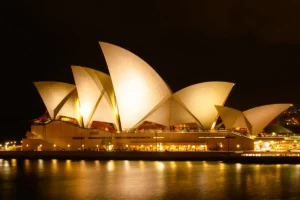
💎 Expert Insight: Travelers interested in UNESCO World Heritage Sites often pair ancient cultural landmarks like the Acropolis of Athens with modern icons such as the Sydney Opera House, each offering a distinct perspective on human achievement.
🔗 Official Resources
- Official Website: Hellenic Heritage
- Ticket Reservations: Tickets: Acropolis of Athens
- Visitor Information: Visit: Acropolis of Athens
ℹ️ Disclaimer
Operational details such as opening hours, fees, closure dates, and booking procedures are subject to change without notice. Travelers should verify time-sensitive information through official government sources before finalizing travel plans.