Colosseum Visitor Guide: Tickets, Rules and Common Mistakes
At a Glance ⭐
- Destination: The Colosseum (Flavian Amphitheatre), part of the Parco Archeologico del Colosseo
- Location: Piazza del Colosseo, Rome, Italy
- Recognition: UNESCO World Heritage Site | New7Wonders of the World
- Visit duration: 1.5–3 hours depending on ticket type
- Opening hours: Daily from 8:30 a.m.; closing time shifts by season
- Weekly closure: None — open every day of the week
- Reservation Required: Yes (mandatory)
- Entry fee: Tiered pricing by ticket category (Foreign/Domestic Tourist Tier, Reduced Tier for eligible EU youth, Free Tier for visitors under 18 years of age and eligible categories)
- Best visiting time: Early morning (opening) or the final 90 minutes before last admission
- Official website: Parco Archeologico del Colosseo
Overview
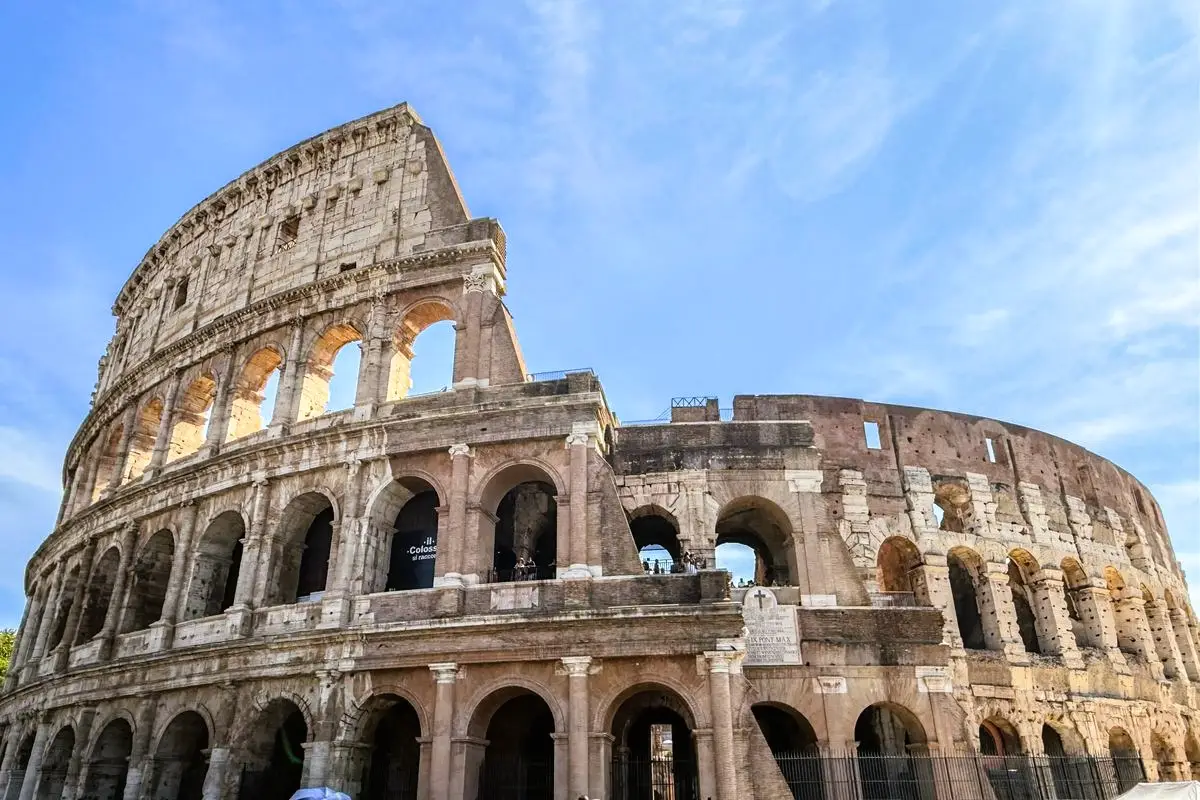
The Colosseum is the ticketed core of a single archaeological zone that also includes the Roman Forum and Palatine Hill. One admission generally covers movement between all three, though the ticket type purchased determines which internal areas — arena floor, underground hypogeum, or upper attic — are accessible on that visit.
This Colosseum Visitor Guide is built for travelers who already know they are going and need the operational sequence right: which gate, which document, which queue, and which hour minimizes standing time. It skips construction history and architectural commentary, since that information does not change how a visit unfolds on the ground.
Visitors should expect a multi-stage process: online reservation, a mandatory identity check at entry, airport-style security screening, and a site that regularly holds several thousand people at once. All of these steps are standard for a monument receiving millions of visitors annually, but arriving without a plan adds unnecessary delays.
Planning The Visit
- Best season: Spring (April–May) and autumn (late September–October) combine manageable heat with longer daylight than winter. Extended hours in these windows allow for a slower pace without rushing the last admission cutoff.
- Best time of day: The first entry slot after opening sees the lowest density, since most tour groups arrive mid-morning. The final one to two entry slots before last admission form a second low-density window, though the visit itself runs shorter.
- Average visit duration: A general-entry ticket typically takes 1.5–2 hours to cover comfortably. Tickets adding arena or underground access extend this to closer to 2.5–3 hours due to additional routing and staff-led sections.
- Peak crowd periods: Midday hours, roughly 11:00 a.m. to 3:00 p.m., see the heaviest combined foot traffic from independent visitors and organized tour groups. This period also coincides with peak heat in summer.
- Weather considerations: Most of the interior circuit is uncovered, so midday sun exposure is direct with minimal shade. Rain does not close the site, but stone walkways become slick, which slows movement through the upper tiers.
- Advance booking recommendations: Reservation is mandatory, not optional, for every ticket type — walk-up entry without a booking is not guaranteed even for on-site purchases. Tickets typically become available 30 days ahead of a given visit date; underground and attic slots have historically sold out within a short window of release.
Getting There
By Air
Rome’s two airports connect to the city center by dedicated rail or coach services rather than a direct link to the Colosseum itself. From Leonardo da Vinci–Fiumicino (FCO), the Leonardo Express train runs nonstop to Roma Termini station, from where the Colosseum is reachable by metro. From Ciampino (CIA), shuttle buses run to Termini or to nearby metro stations; there is no rail line at Ciampino. Both routes require a transfer onto Rome’s local transit network to complete the journey.
By Train
Roma Termini is the principal rail hub for both domestic high-speed services and regional trains. From Termini, Metro Line B reaches the Colosseo stop directly, without further transfers. Travelers arriving at smaller stations such as Roma Tiburtina can reach Termini or connect onto Line B at an intermediate stop, depending on the specific regional line used.
By Road
Central Rome around the Colosseum sits inside a restricted traffic zone (ZTL) with camera enforcement; private vehicles without a permit face fines for entry during controlled hours. Long-distance coach and intercity bus arrivals typically terminate at Roma Tiburtina or designated coach parking outside the historic center, requiring a metro or bus connection for the final approach.
Local Transport, Parking, and the Final Stretch
- Metro Line B stops directly at Colosseo, adjacent to the main entrance.
- Metro Line C stops right at the Colosseo–Fori Imperiali.
- Bus lines 51, 75, 81, 85, 87, and 118 all serve stops at or near Piazza del Colosseo.
- Tram line 3 also stops within walking distance of the entrance.
- No dedicated visitor parking exists at the monument itself; nearby paid garages serve the wider historic center.
- Licensed taxis display a “TAXI” roof sign, are white, and carry a Rome municipal logo — unmarked cars offering rides near the entrance should be avoided.
- Walking distance from the Colosseo metro exit to the main entrance queue is approximately 100 meters.
Entry Process
Ticket type determines which entrance a visitor is routed to, and arriving at the wrong gate does not simply mean a short walk — it can mean re-joining a different queue entirely.
- General admission and most online-booked tickets: routed through the main reservation-holder entrance, facing the metro exit.
- Arena- or underground-inclusive guided tickets: routed through a separate spur entrance used specifically for staff-led small-group access.
- Large tour groups: use a dedicated group entrance, distinct from the individual-visitor lanes.
At every entrance, staff check the printed or digital ticket against a matching photo ID, since Colosseum tickets are issued in the named holder’s identity. A passport or national ID card satisfies this requirement; a photo of a document on a phone typically does not.
⚠️ Warning: Tickets cannot be resold or transferred informally. Under strict official policy, a name change is permitted only once, exclusively for specific documented reasons, and must be submitted no later than midnight seven days prior to the visit date.
After identity verification, all visitors — regardless of ticket type or group size — pass through a metal detector and bag X-ray screening. This step is not skipped by skip-the-line or guided products; those tickets only remove the wait for ticket purchase, not the security queue.
- Belts, watches, and bracelets may need to be removed if they trigger the detector.
- Bags are placed directly on the X-ray belt; small electronics can often stay inside the bag.
- Re-entry after exiting is not permitted — a ticket is voided at the point of exit.
Tickets & Booking
Booking Tickets Online or at the Gate
Reservation of a specific entry time slot is compulsory for every visitor, including those planning to pay at the gate. The official booking portal is the only source guaranteed to hold genuine time-slot inventory; third-party resellers frequently list availability that does not match the official system in real time.
| Ticket Category | Access Included | Tier |
|---|---|---|
| Standard/General Entry | Colosseum first & second levels, Roman Forum, Palatine Hill | Foreign Tourist Tier |
| Full Experience (Arena or Underground) | Adds arena floor or hypogeum access, valid 2 consecutive days | Foreign Tourist Tier |
| Full Experience (Attic/Panoramic Lift) | Adds attic level via lift, valid 2 consecutive days | Foreign Tourist Tier |
| Reduced | Standard access, restricted to eligible EU citizens aged 18–25 | Reduced Tier |
| Free Admission | Standard access, under-18s and other eligible categories | Free Tier (reservation still required) |
- Online booking accepts standard international payment cards through the official portal.
- At-gate purchase exists but is subject to same-day availability, which frequently reaches capacity well before midday.
- A separate, non-refundable online reservation fee applies to bookings made through the official portal, including free tickets.
- A valid photo ID matching the ticket name is required at entry regardless of how the ticket was purchased.
- First Sunday of each month carries free general admission, subject to separate on-site queuing rules rather than online booking.
Night Viewing
A dedicated evening arena-and-underground guided product operates outside standard daytime hours, but its availability is highly variable. The official operator regularly places this night product on temporary suspension, removing all active bookable dates from the calendar. Travelers interested in after-hours access must verify availability directly on the official ticketing portal before finalizing plans, as its operational status can shift without notice.
Visitor Guidelines
- Dress code: No formal dress code is enforced. Comfortable, closed-toe walking shoes are strongly advised for uneven ancient stone surfaces.
- ✅ Sleeveless tops and shorts are permitted.
- ❌ Costumes, gladiator-style props, or dress-up items are not permitted at entry.
- Photography/videography rules: Personal photography is permitted throughout. Tripods and monopods are generally restricted; small handheld stabilizers are typically tolerated but not guaranteed.
- Allowed/Prohibited items (strict list):
- ✅ Allowed: Small to medium backpacks that pass through the X-ray scanner
- ✅ Allowed: Sealed plastic or metal water bottles
- ✅ Allowed: Compact folding umbrellas
- ❌ Prohibited: Large backpacks, suitcases, or wheeled luggage
- ❌ Prohibited: Glass bottles or containers of any kind
- ❌ Prohibited: Knives, scissors, or other sharp objects
- ❌ Prohibited: Aerosol sprays, including deodorant and perfume canisters
- ❌ Prohibited: Large or pointed umbrellas
- ❌ Prohibited: Pets, with the exception of certified service animals
- Bag policies: Maximum accepted bag dimensions are commonly cited around 40×35×15 cm; anything larger is refused at security, not confiscated for later collection.
- Food & drink rules: Sealed water is allowed through screening. Meals and snacks are not permitted inside the monument itself, and no food vendors operate within the ticketed area.
- Expected behavior: Climbing on ruins, touching restricted structural elements, and blocking stairways for extended photography are actively discouraged by on-site staff.
- Special restrictions / guides & photographers: Independent tour guides operating commercially within the site are required to hold official authorization recognized by the park administration; unlicensed guiding activity is restricted.
💡 Tip: No cloakroom or lockers exist at the monument. Oversized bags must be resolved before arrival, not at the gate.
Accessibility & Visitor Facilities
| Facility | Status |
|---|---|
| Wheelchair access | ✅ Step-free entrance on the north side; internal elevator between lower tiers |
| Navigability for elderly visitors and children | ✅ Manageable on main levels; upper tiers involve uneven ancient stonework |
| Toilets | ✅ Present near the main entrance area |
| Drinking water availability | ✅ Fountains present between tiers; vending machines on upper level |
| Cloakrooms/lockers | ❌ Not available on-site |
| Seating | ✅ Limited rest areas at designated viewing points |
| First aid | ✅ Staffed point present on-site |
| Parking | ❌ No dedicated visitor parking at the monument |
The elevator connecting lower levels accommodates a limited number of standard wheelchairs per trip and requires staff assistance to operate. A small number of loaner wheelchairs are available at the main entrance on a first-come basis and cannot be reserved ahead of arrival. Travelers requiring one should proceed directly to the entrance reception point after clearing security.
Disabled-visitor and companion tickets must be booked together, in the same transaction, through the official portal — booking separately and requesting a companion rate at the gate is not accepted. Supporting documentation, such as a national disability certificate or equivalent, should be carried alongside the standard photo ID.
During The Visit
Immediately past security, visitor flow splits by ticket type: general-access visitors proceed toward the first-level walkway, while arena- and underground-ticket holders are met by staff for a scheduled, guided sub-route at a fixed time printed on the ticket.
- First-level galleries form the main circulation path and see continuous foot traffic throughout the day.
- Second-level terraces offer the widest unobstructed views of the arena footprint and tend to hold visitors longer, creating a natural bottleneck near the connecting stairwells.
- The connecting corridor toward the Colosseum Museum sees lighter traffic and functions as a practical decompression point away from the main crowd flow.
- Stairwells between levels are original stone with uneven steps → movement is slower here than the flat corridor sections.
- Visitors holding timed arena or underground tickets should confirm their designated meeting point immediately after clearing security. Missing the scheduled staff group affects only that portion of the ticket, while general Colosseum access remains valid.
Groups aiming to see the Roman Forum and Palatine Hill on the same admission should plan to exit toward those areas with adequate time before the site-wide last-admission cutoff, since re-entry to the Colosseum itself is not possible once exited.
Things Worth Knowing
- The metro exit funnels the large majority of foot traffic to the main north-side entrance; the Palatine Hill entrance on Via di San Gregorio sees comparatively lighter queues for visitors already holding a valid combined ticket.
- Midnight Rome time is when cancelled time slots are commonly re-released into the booking system, useful for travelers who find a preferred date sold out.
- The Domus Aurea, part of the same park network, operates on a separate Friday through Sunday schedule and is closed the first Sunday of the month — unlike the Colosseum’s free-Sunday rule.
- Historical costume, including replica armor or weapons carried by street performers outside the entrance, is unrelated to official park staff and does not grant any entry privilege.
- Free-admission days draw substantially higher walk-up volume than paid days, since no online reservation exists for that specific access category in the same way as paid tickets.
💎Expert Insight: The Colosseum’s mandatory, non-transferable timed-entry system reflects a broader trend in the management of the world’s busiest landmarks. If you’re planning to visit other New Seven Wonders, expect similar operational requirements. For example, visiting Christ the Redeemer in Brazil also requires advance planning, selecting a transport or entry time where applicable, navigating capacity controls, and arriving early to minimize queues and avoid peak crowds.
Official Resources
- Official Website: Parco Archeologico del Colosseo
- Ticket Reservations: Available through the official website.
- Visitor Information: Available through the official website.
Disclaimer
Operational details such as hours, fees, closures, and construction-related access conditions are subject to change without notice. Travelers should verify time-sensitive specifics through the official booking portals listed above before finalizing travel plans.